The report
Short on time? Quick read shows each finding's headline and chart, and the full text is one click away on every finding.
Switch between quick read and the full report with the bar at the bottom of your screen.
With all the talk of AI, talent still wants the same things: pay, flexibility, transparency and a reply.
Picture a candidate who rewrites their resume with AI on a Sunday night, applies on Monday for a job that asks for AI skills but doesn't mention the salary, gets screened by AI on Tuesday and never hears another word. Every step in that story is now normal, which is why we wanted to look at it properly.
We asked 2,942 knowledge workers in the UK, US and India what they want from work in 2027, then looked at 82,891 jobs posted on Archer this year to see what employers are actually offering. The findings were simpler than we expected.
People have taken up AI faster than their employers have, both at work and in the job hunt. But what they want from a job has barely moved: fair pay, flexibility, transparency and a reply. And the more in demand someone is, the higher they set the bar on all four.
Most of what candidates want is information employers already have, like the salary, the working pattern and how the process works.
1. AI at work
6 findings
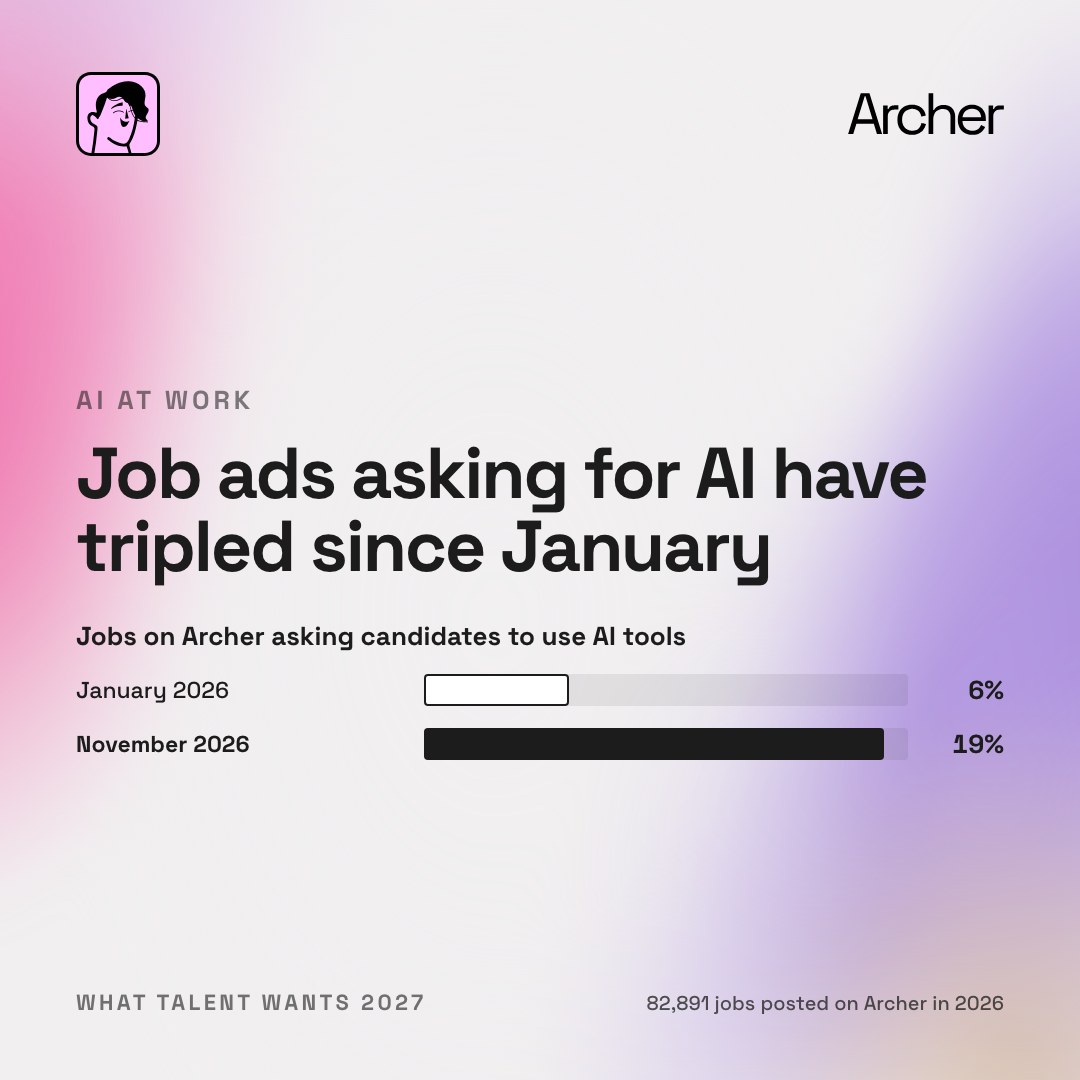
Job ads asking for AI have tripled since January
In January 2026, 6% of jobs on Archer asked candidates to use AI tools. By November that had reached 19%, which takes it from one job in 17 to one in five in the space of ten months. Requests for AI and machine-learning skills climbed over the same period, from 17% of jobs to 29%.
The rise is widespread. Among the employers who posted jobs all year, more than three times as many increased how often they asked for AI as pulled back.
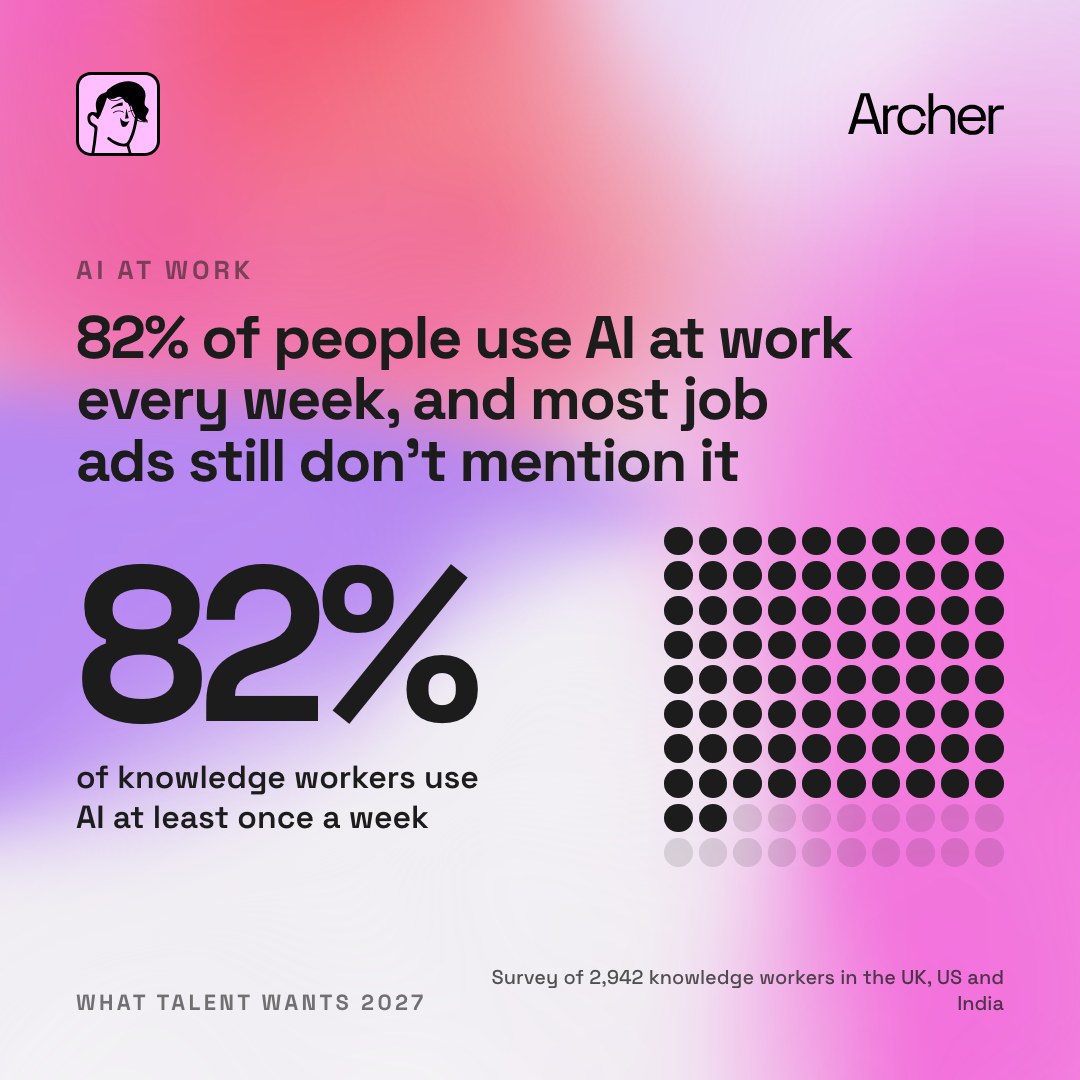
82% of people use AI at work every week, and most job ads still don't mention it
82%
of knowledge workers use AI at least once a week
Even after tripling, the job ads are a long way behind the work. 82% of knowledge workers use AI at least once a week and 63% use it every day, while just 5% never touch it. Most job descriptions describe a version of the job that people stopped doing a while ago.
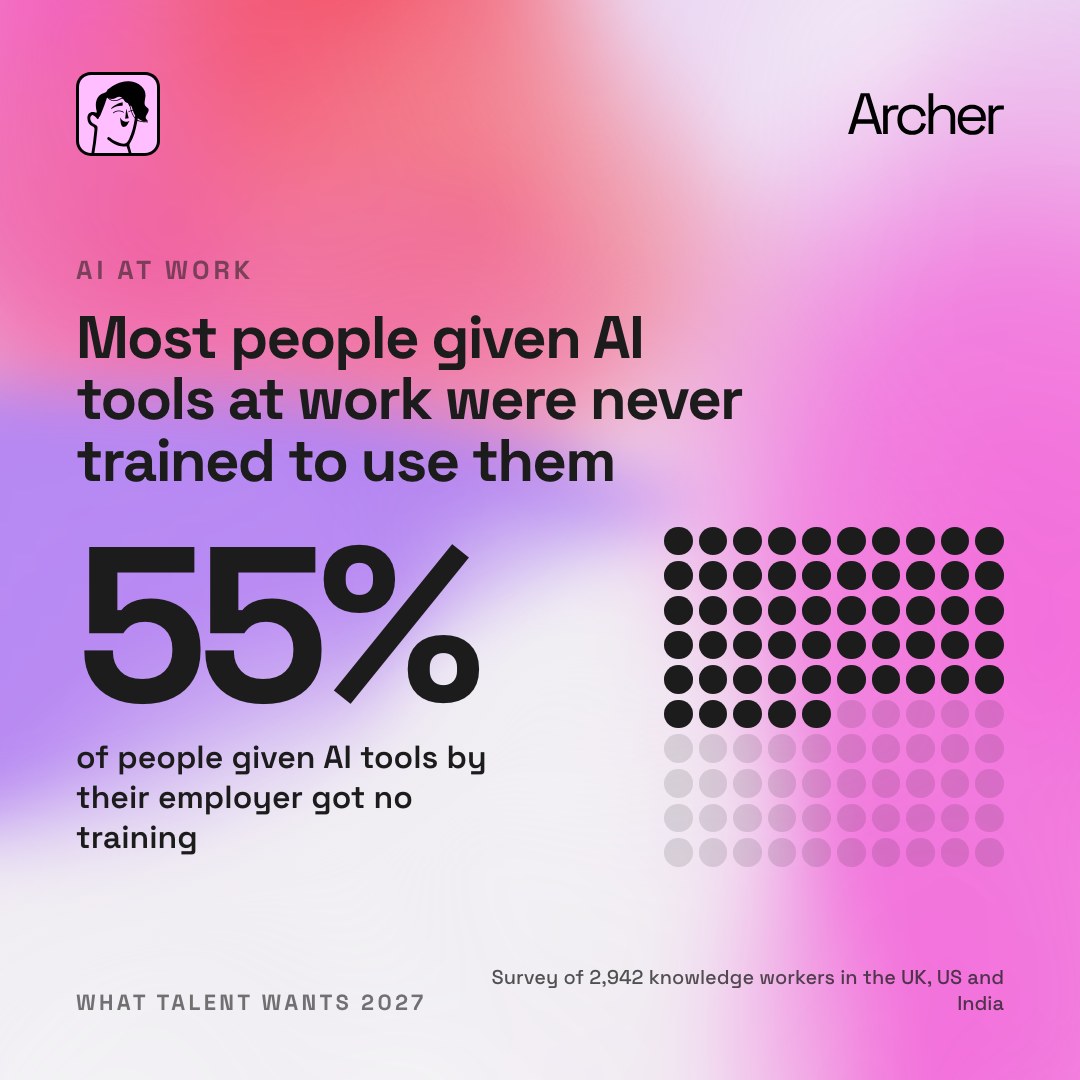
Most people given AI tools at work were never trained to use them
55%
of people given AI tools by their employer got no training
Of the people whose employer provides AI tools, 55% were given no training on how to use them, and a further 18% of all workers say their employer has no clear AI policy at all.
It shows up in how companies sell themselves, too. Only 3% of jobs offer working with AI as a reason to join, even though 51% of candidates say AI tools from their next employer are important or essential. So far, employers are asking candidates for AI more than they're offering it.
The training gap appears to matter. People who were trained on AI by their employer are noticeably more likely to feel better about their job prospects than a year ago (35%) than those who were handed the tools and left to work it out (24%).
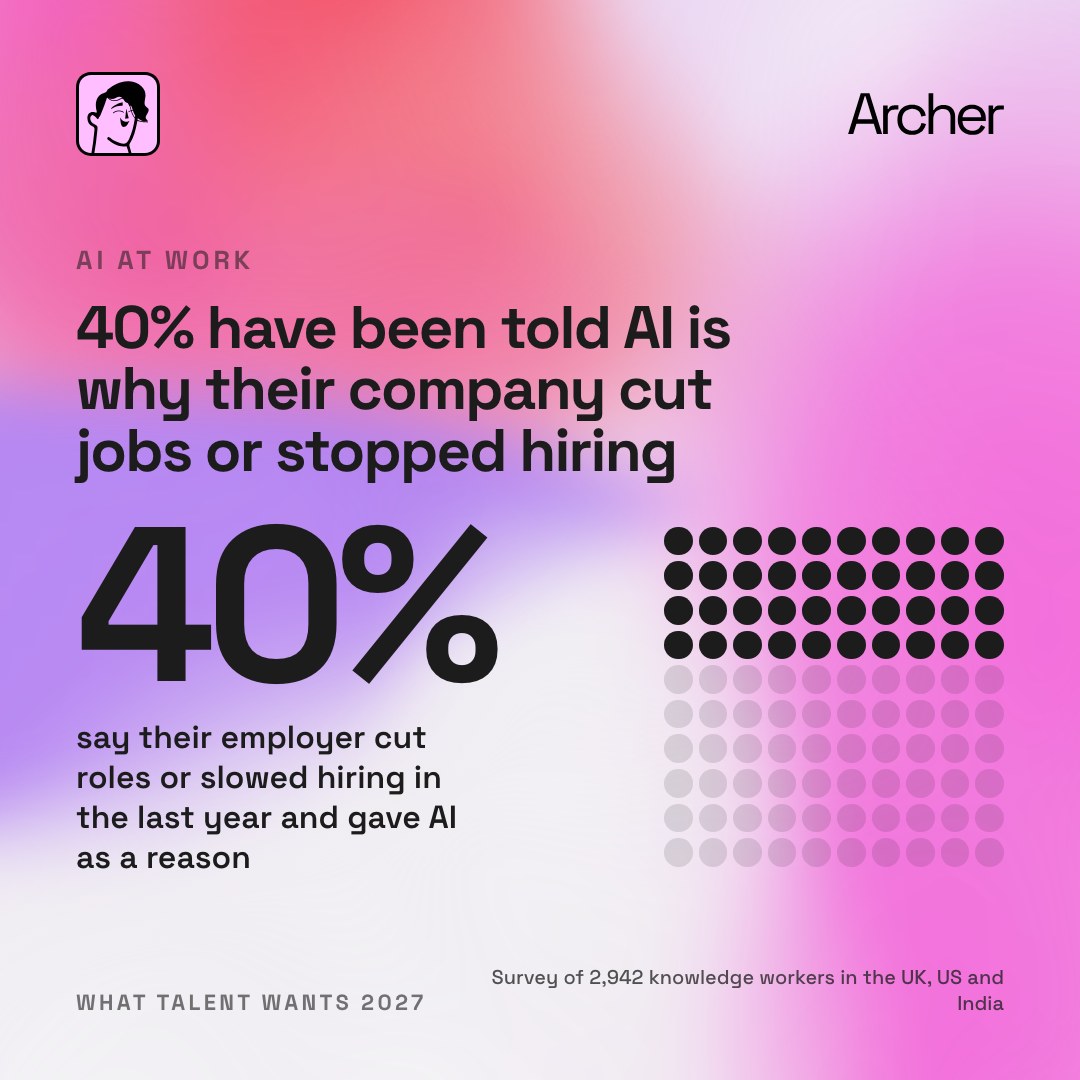
40% have been told AI is why their company cut jobs or stopped hiring
40%
say their employer cut roles or slowed hiring in the last year and gave AI as a reason
Two in five say their employer cut roles or slowed hiring in the last 12 months and gave AI as a reason. Whether or not AI was the real cause, the explanation leaves a mark on the people who stay. They're less confident about finding a good role (50%, against 41% of those who haven't heard it) and more likely to say they'll change jobs in 2027 (72% against 64%).
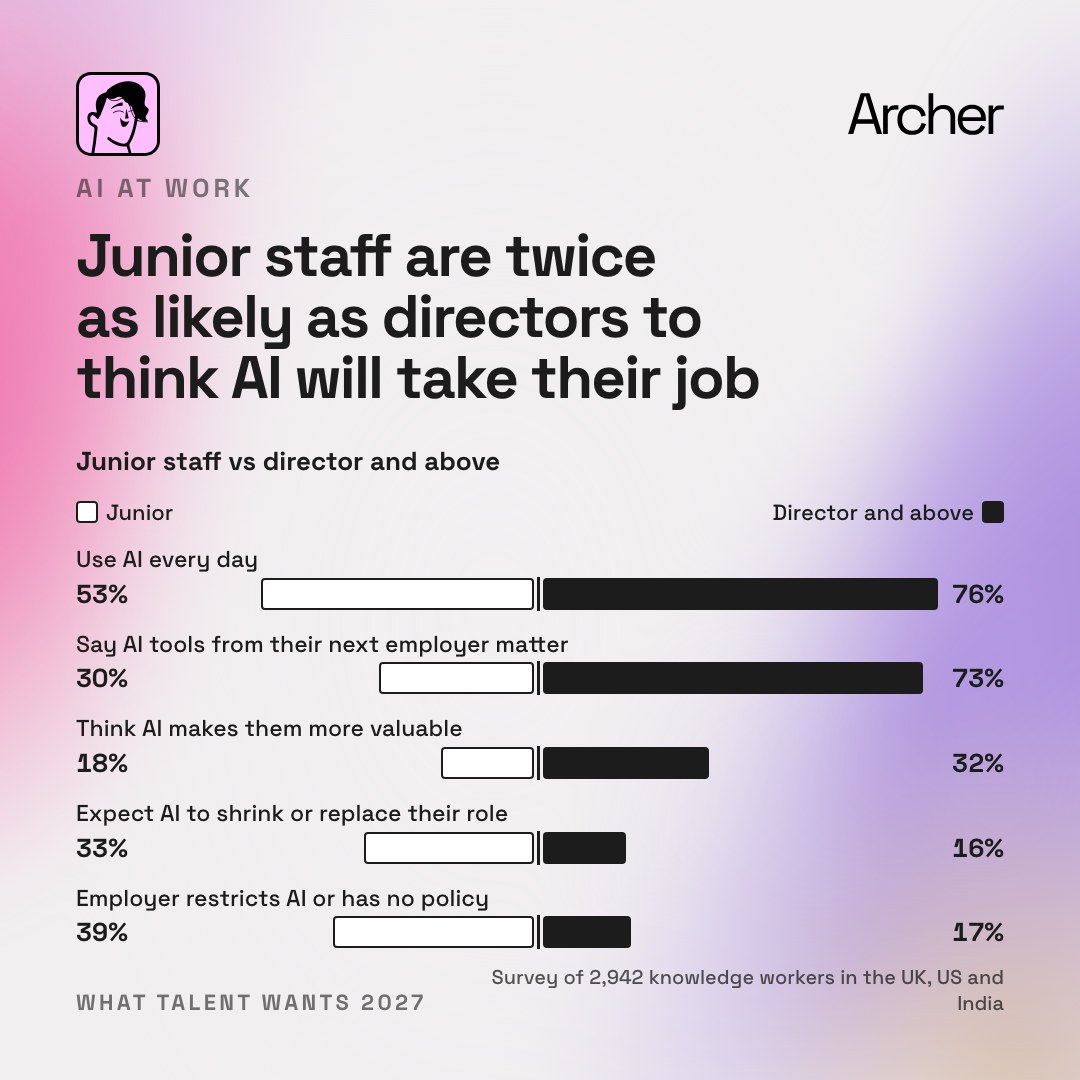
Junior staff are twice as likely as directors to think AI will take their job
The more senior someone is, the more positive they are about AI.
| Junior | Director and above | |
|---|---|---|
| Use AI every day | 53% | 76% |
| Say AI tools from their next employer matter | 30% | 73% |
| Think AI makes them more valuable | 18% | 32% |
| Expect AI to shrink or replace their role | 33% | 16% |
| Employer restricts AI or has no policy | 39% | 17% |
The people deciding how AI gets used are the most positive about it, and the people with the least access to it are the most worried. Across the whole survey, 24% expect AI to shrink or replace their role and 23% think it makes them more valuable, so opinion is split almost down the middle and seniority is a good predictor of which side someone lands on.
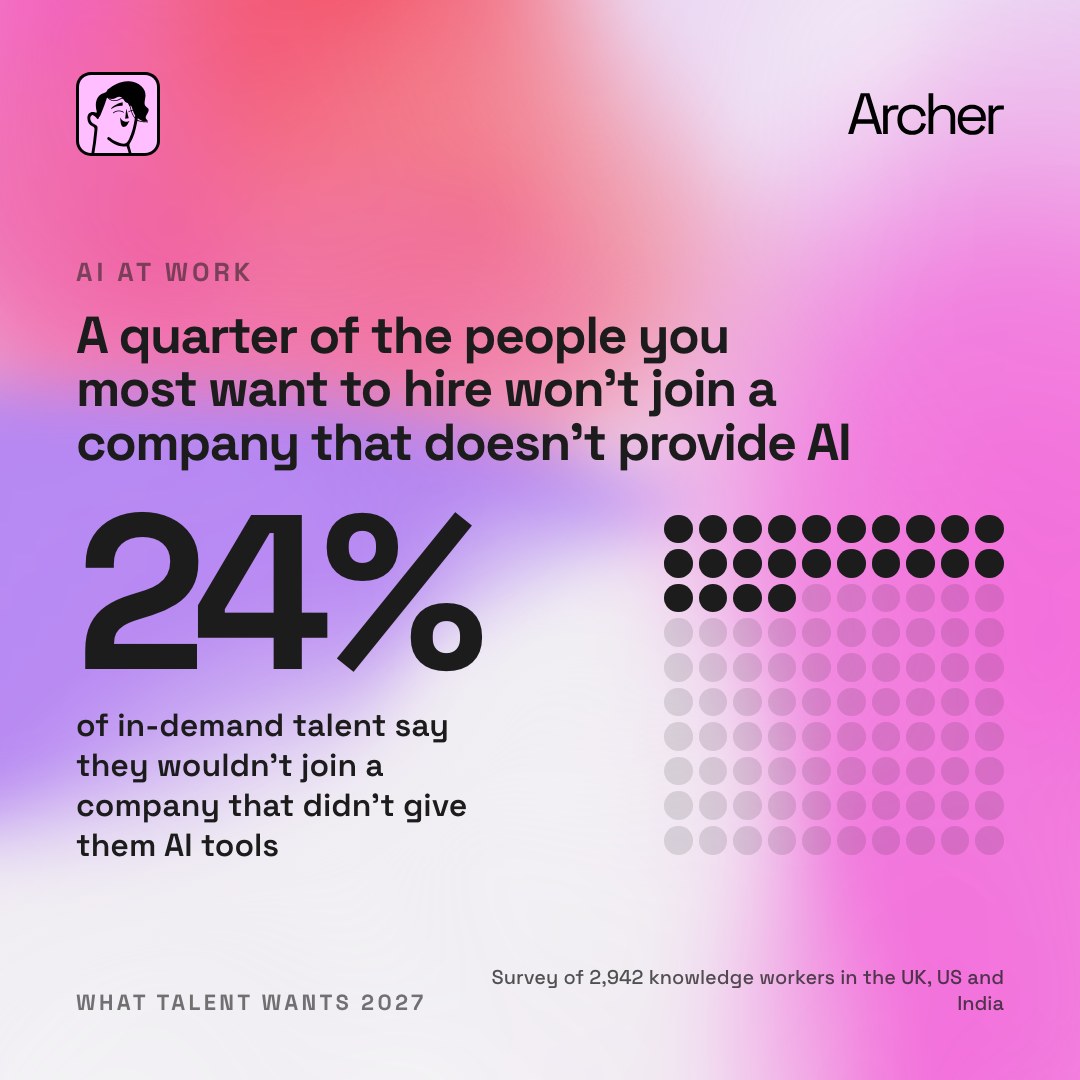
A quarter of the people you most want to hire won't join a company that doesn't provide AI
24%
of in-demand talent say they wouldn't join a company that didn't give them AI tools
People who are in work and not looking are the most AI-fluent group we surveyed. 72% use AI every day, 42% were trained on it by their employer, and 24% say they wouldn't join a company that didn't give them AI tools, compared with 16% of everyone else. If you're trying to hire people who are doing well where they are, they'll expect AI tools from day one.
2. AI in hiring
7 findings
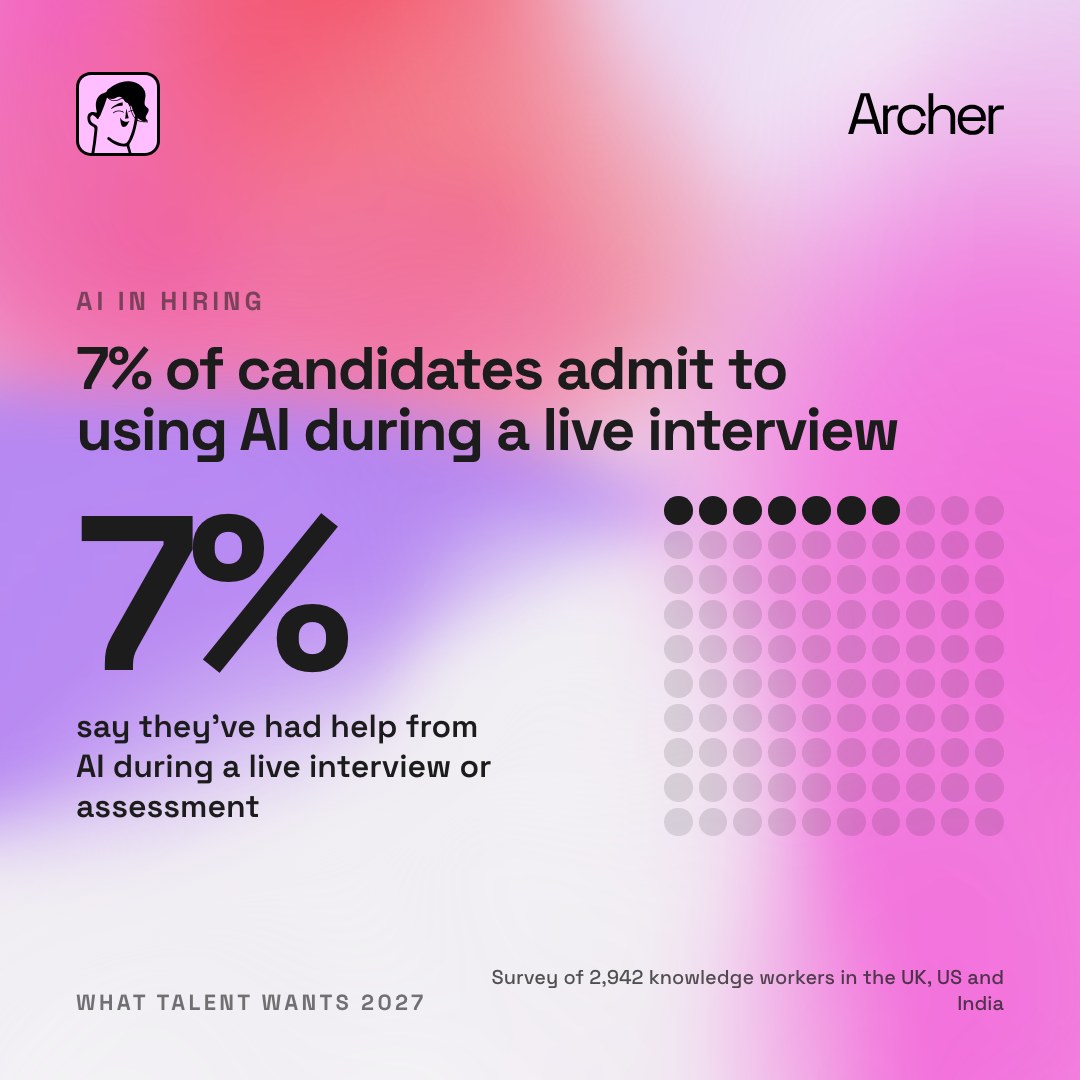
7% of candidates admit to using AI during a live interview
Using AI to job hunt is now the norm. 88% of knowledge workers have done it, with 74% using it to write or tailor a CV or resume, 61% for cover letters and application answers, and 59% to prepare for interviews. A smaller group has gone further and lets AI apply to jobs automatically: 17% overall, and nearly a quarter in the US (23%) against 12% in the UK.
7%
say they've had help from AI during a live interview or assessment
Some are using it in the room as well. 7% say they've had help from AI during a live interview or assessment. That's what people are willing to admit in a survey, so the real figure is probably higher.
Most of this is people sensibly using the best tool they have. It does mean that a polished resume, and sometimes a polished interview answer, tells you less than it used to.
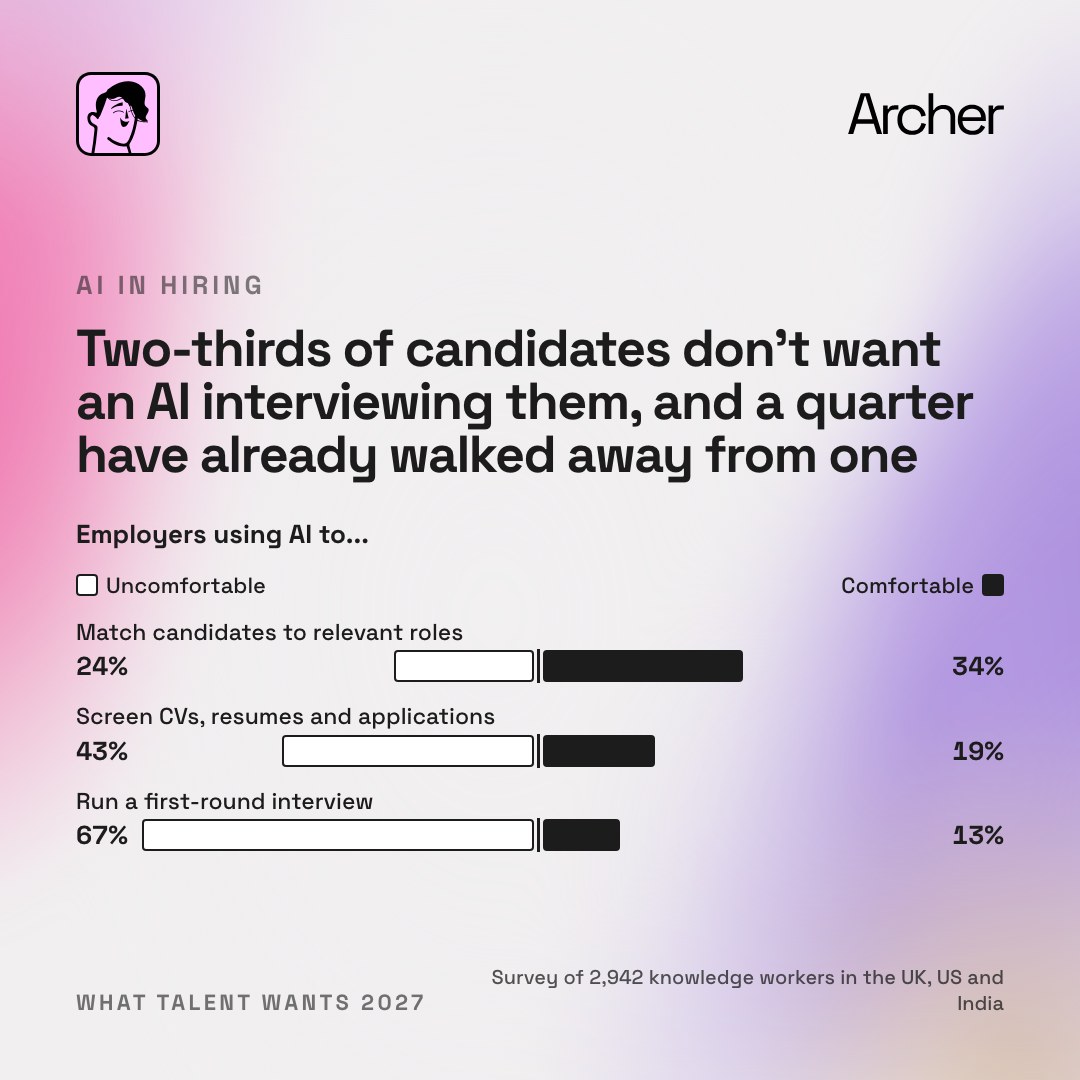
Two-thirds of candidates don't want an AI interviewing them, and a quarter have already walked away from one
How candidates feel about employers using AI depends a lot on where in the process it sits.
| Employers using AI to... | Comfortable | Uncomfortable |
|---|---|---|
| Match candidates to relevant roles | 34% | 24% |
| Screen CVs, resumes and applications | 19% | 43% |
| Run a first-round interview | 13% | 67% |
Matching is the only one of the three where more people are comfortable than not. Opinion turns against screening, and by the time AI is running the interview, two-thirds are uncomfortable. 71% think a human recruiter would assess their application more fairly, against 7% who'd back AI, and 26% dropped out of a hiring process in the last year because of an automated or AI-led interview.
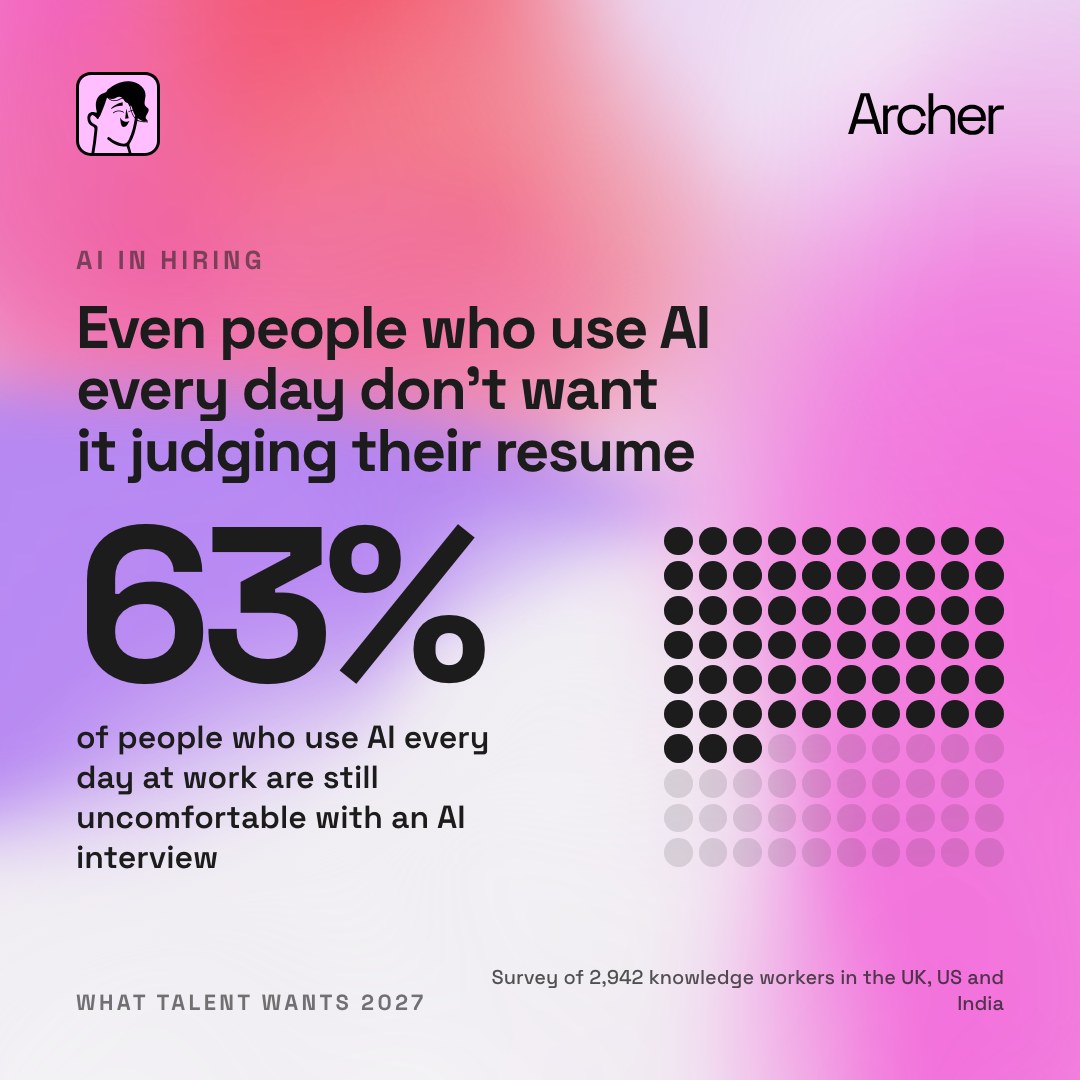
Even people who use AI every day don't want it judging their resume
63%
of people who use AI every day at work are still uncomfortable with an AI interview
The discomfort is just as strong among heavy AI users. Among those who use AI every day at work, 63% are still uncomfortable with an AI interview. These are people who rely on AI to write the resume and still don't want it deciding what that resume is worth.
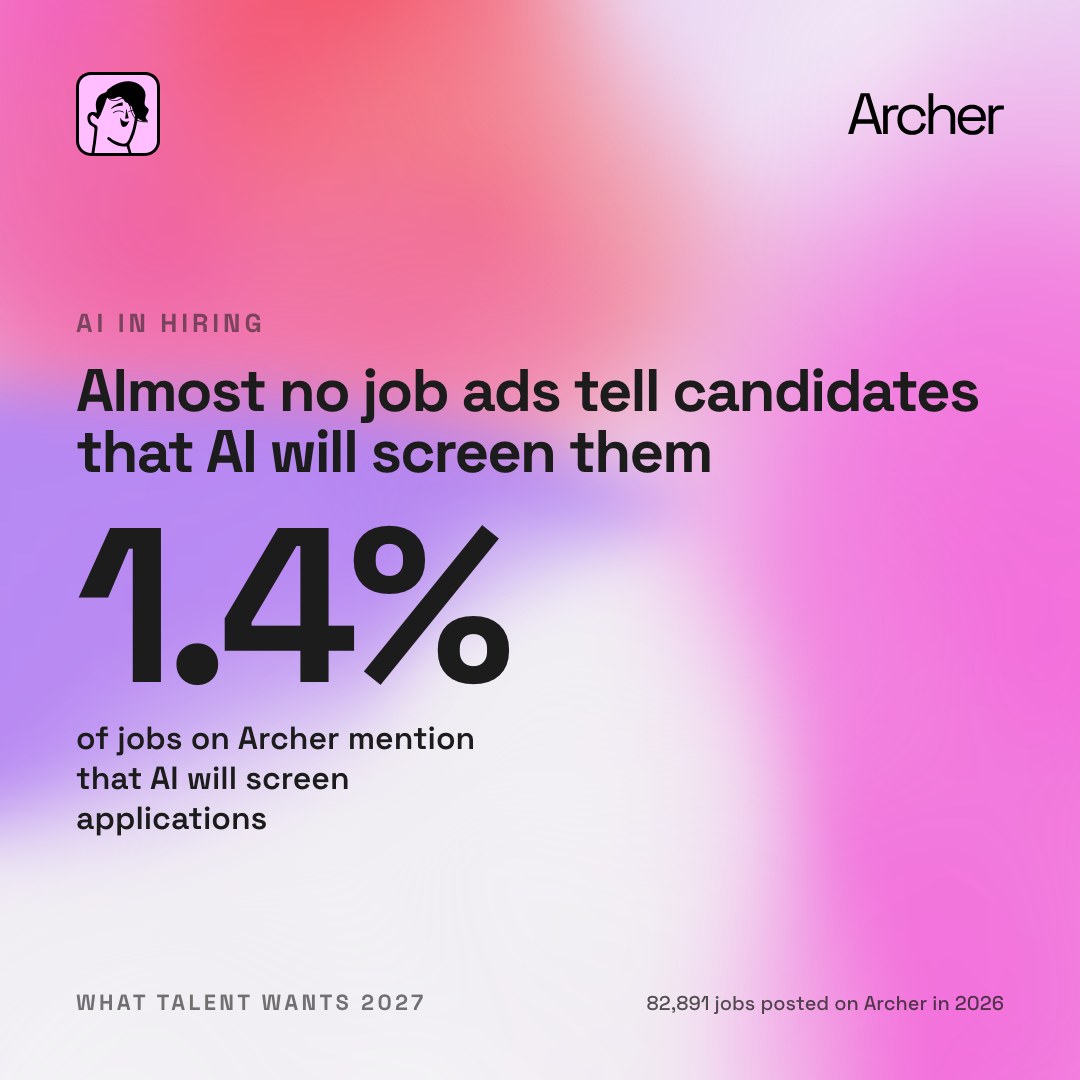
Almost no job ads tell candidates that AI will screen them
1.4%
of jobs on Archer mention that AI will screen applications
Only 1.4% of jobs on Archer mention that AI will screen applications, and almost none mention an AI interview. Whatever is happening behind the application form, candidates tend to find out afterward, if they find out at all.
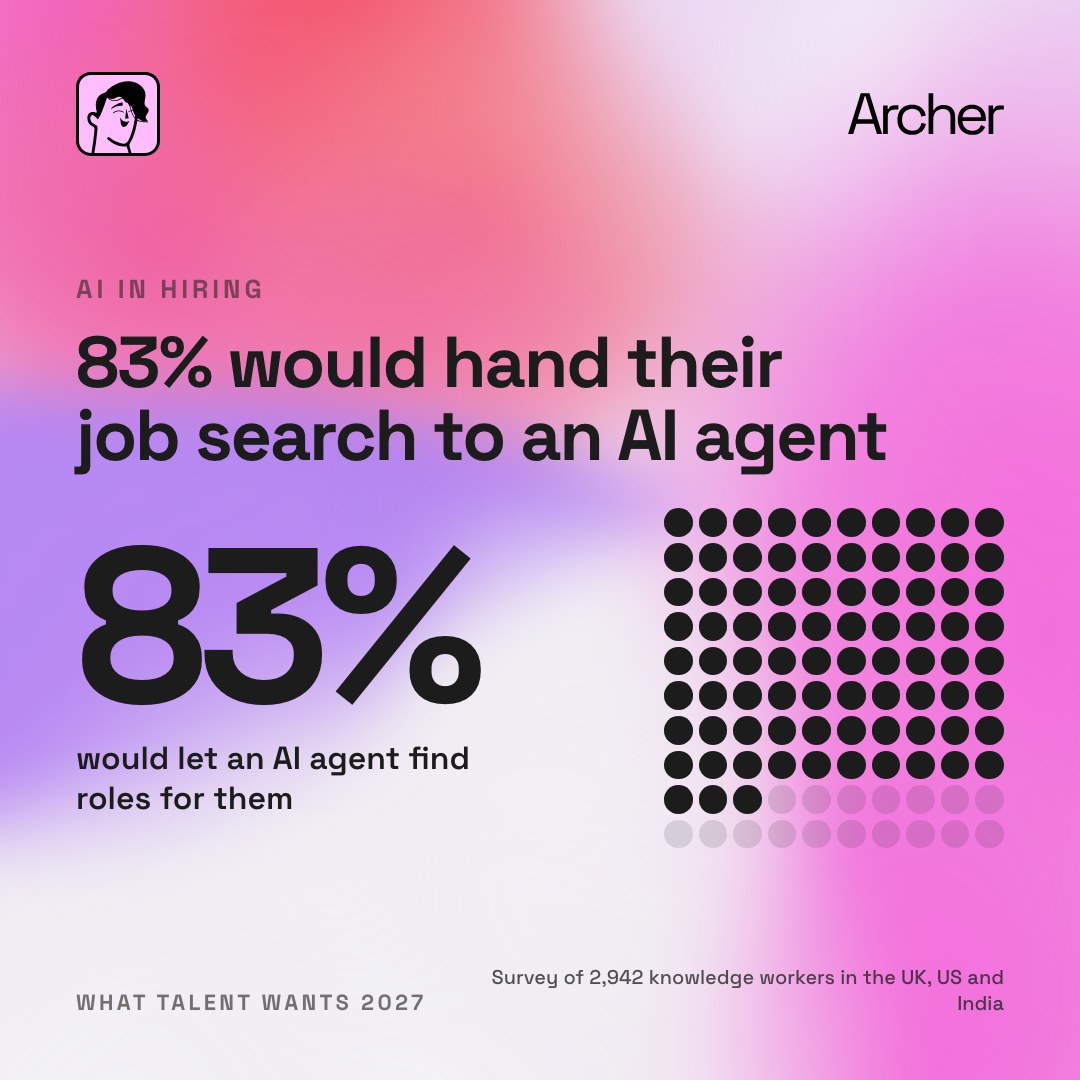
83% would hand their job search to an AI agent
83%
would let an AI agent find roles for them
The same people who resist AI as an interviewer are very open to AI working on their behalf. 83% would let an AI agent find roles for them. The largest group, 47%, want the agent to find the roles and leave the applying to them, while 36% would let it apply as well. The difference seems to be whose side the AI is on.
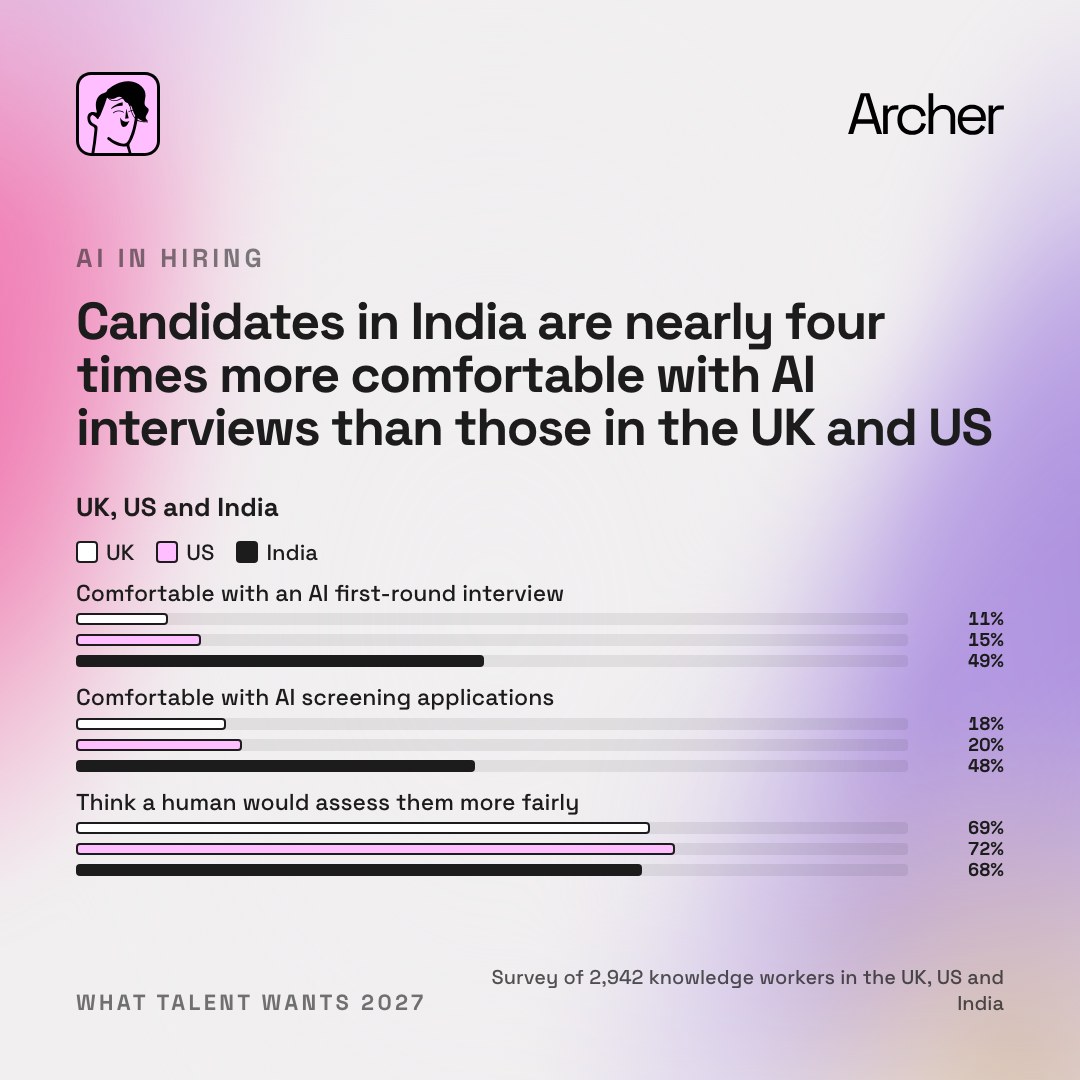
Candidates in India are nearly four times more comfortable with AI interviews than those in the UK and US
| UK | US | India | |
|---|---|---|---|
| Comfortable with an AI first-round interview | 11% | 15% | 49% |
| Uncomfortable with an AI first-round interview | 70% | 63% | 21% |
| Comfortable with AI screening applications | 18% | 20% | 48% |
| Think a human would assess them more fairly | 69% | 72% | 68% |
The difference isn't explained by who answered in each country. If you compare only tech workers under 35, 53% in India are comfortable with an AI interview against 11% in the UK and US. Candidates in India are still just as likely to believe a human would be fairer, so being comfortable with an AI interview doesn't mean they think it's the better judge.
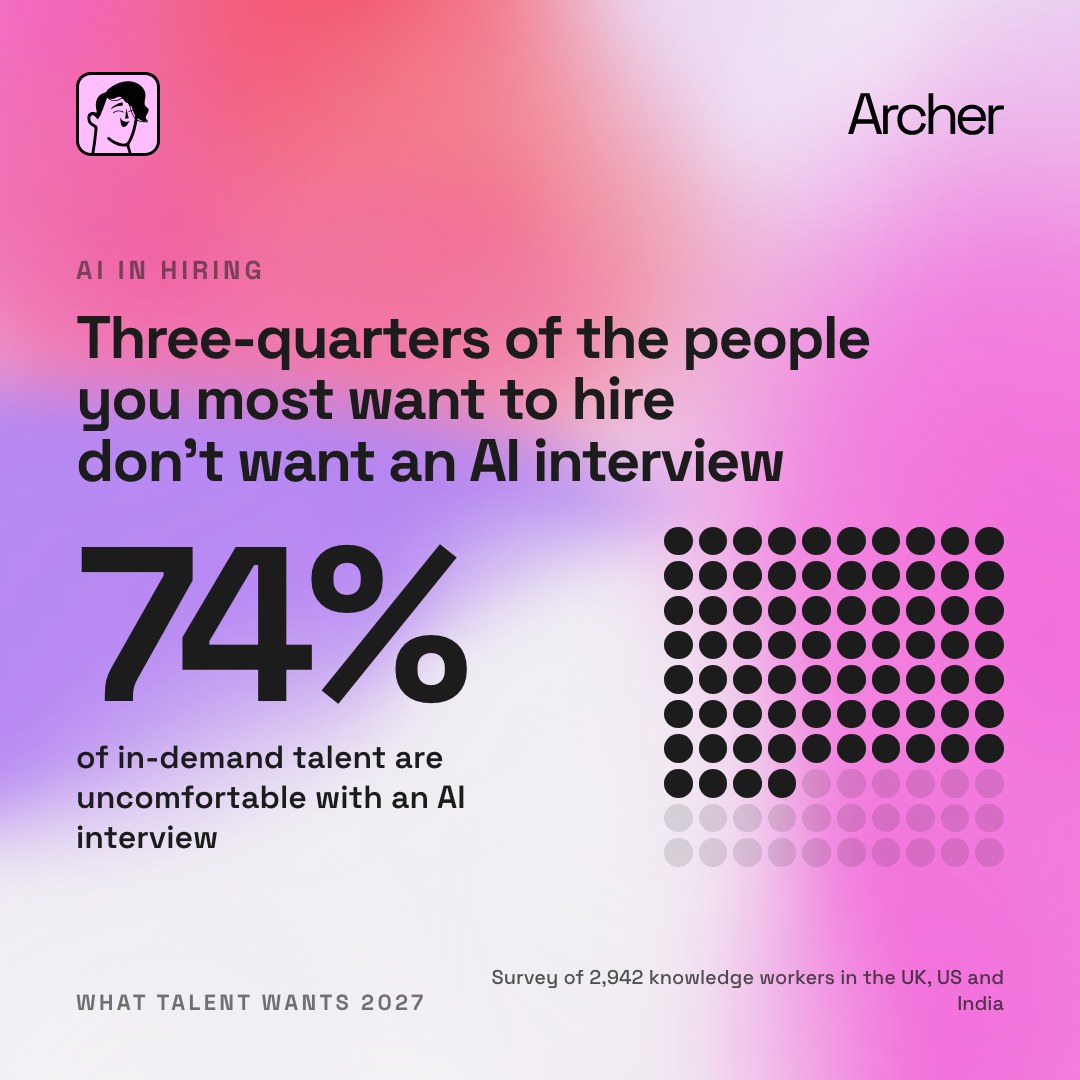
Three-quarters of the people you most want to hire don't want an AI interview
74%
of in-demand talent are uncomfortable with an AI interview
In-demand talent uses AI the most at work and trusts it the least as a judge. Only 10% apply to jobs automatically, and 74% are uncomfortable with an AI interview, which is seven points higher than everyone else. The candidates employers most want to reach are the ones most likely to walk away when the first interview is with a bot.
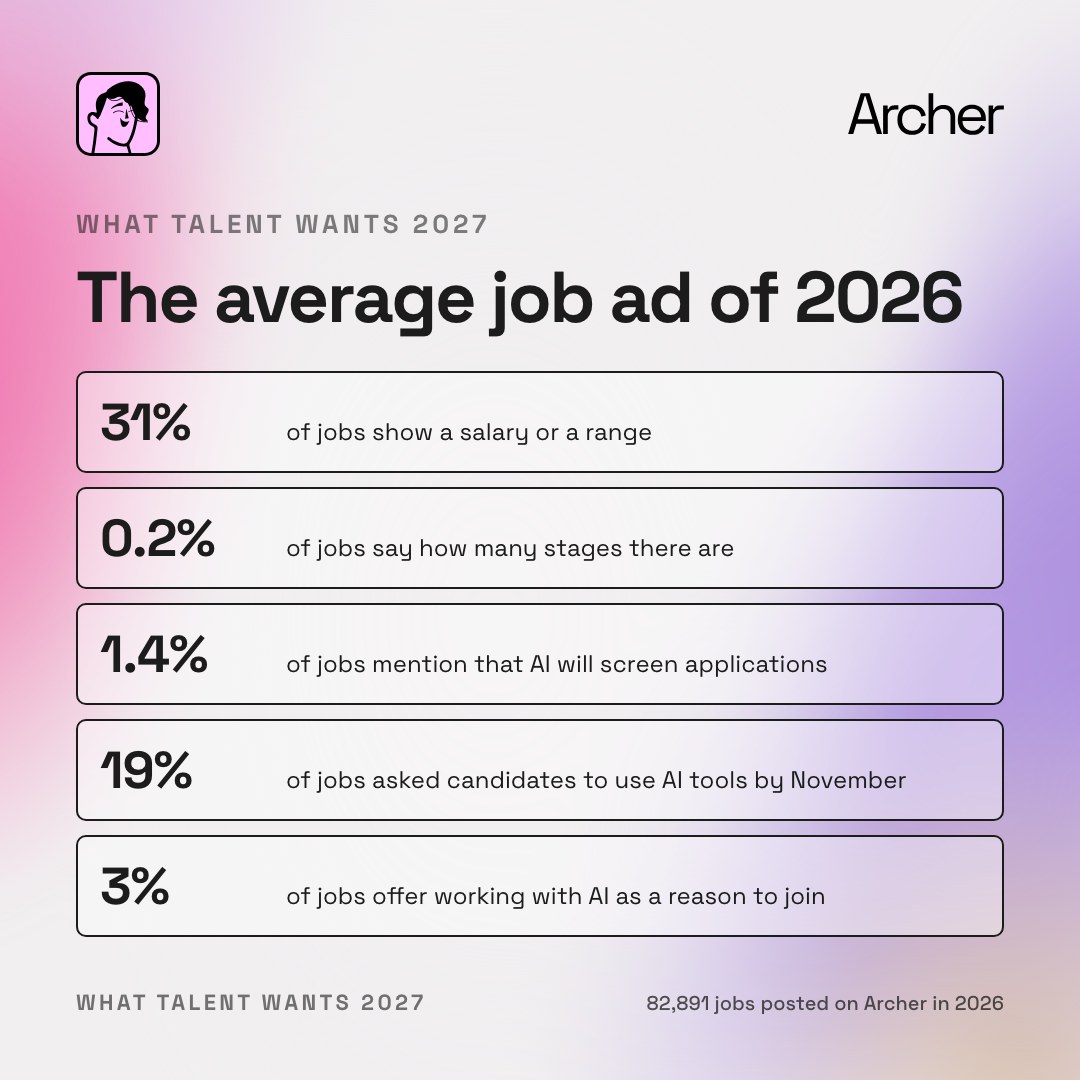
The average job ad of 2026
- 31% of jobs show a salary or a range
- 0.2% of jobs say how many stages there are
- 1.4% of jobs mention that AI will screen applications
- 19% of jobs asked candidates to use AI tools by November
- 3% of jobs offer working with AI as a reason to join
3. What moves talent
8 findings
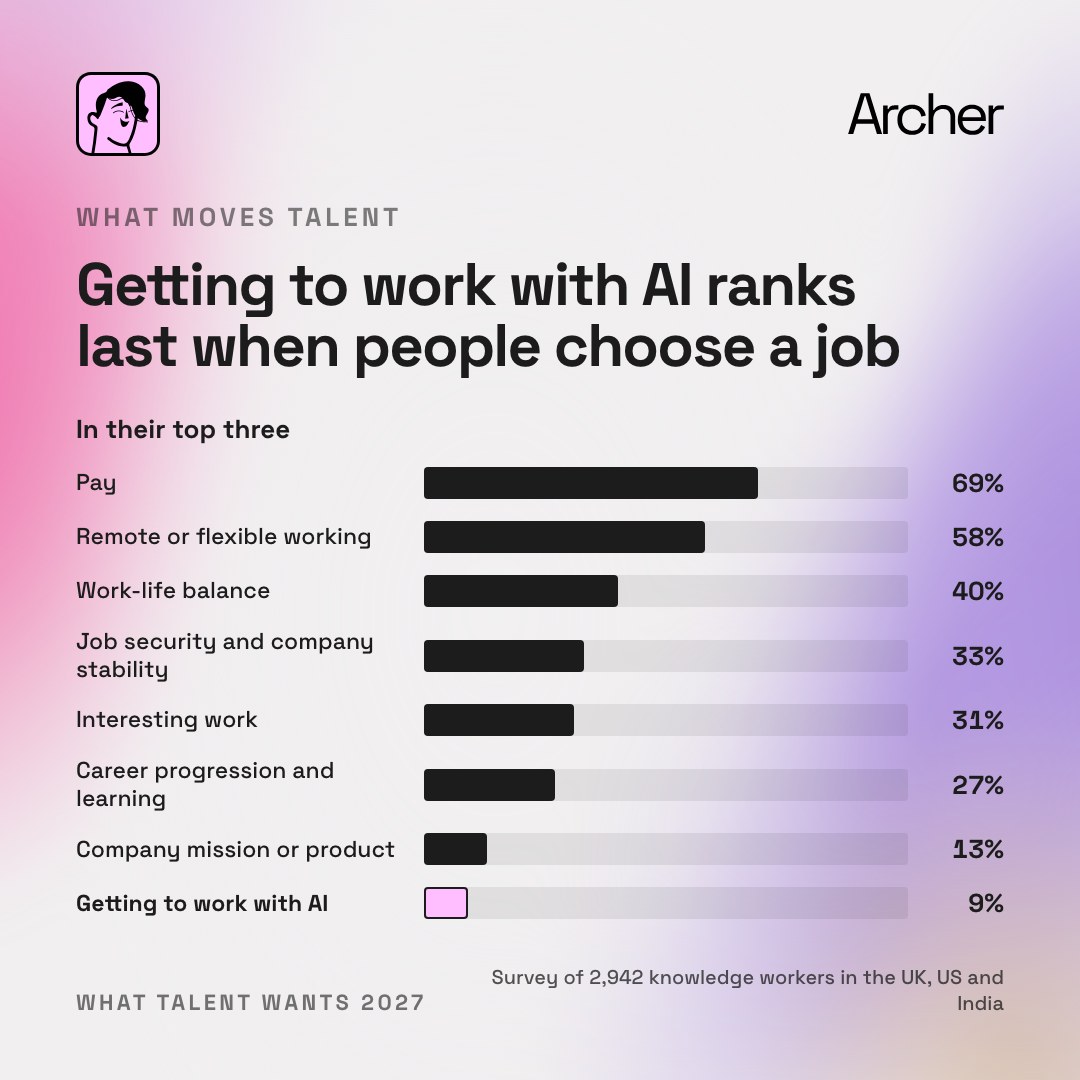
Getting to work with AI ranks last when people choose a job
We asked people to pick the three things that matter most when deciding whether to take a new job.
| Priority | In their top three |
|---|---|
| Pay | 69% |
| Remote or flexible working | 58% |
| Work-life balance | 40% |
| Job security and company stability | 33% |
| Interesting work | 31% |
| Career progression and learning | 27% |
| Company mission or product | 13% |
| Getting to work with AI | 9% |
AI gets a lot of attention and still sits at the bottom of the list. People expect AI tools at work, and very few change jobs to get them. When we asked what matters more than it did a year ago, the most common answer was job security (29%), followed by pay (21%).
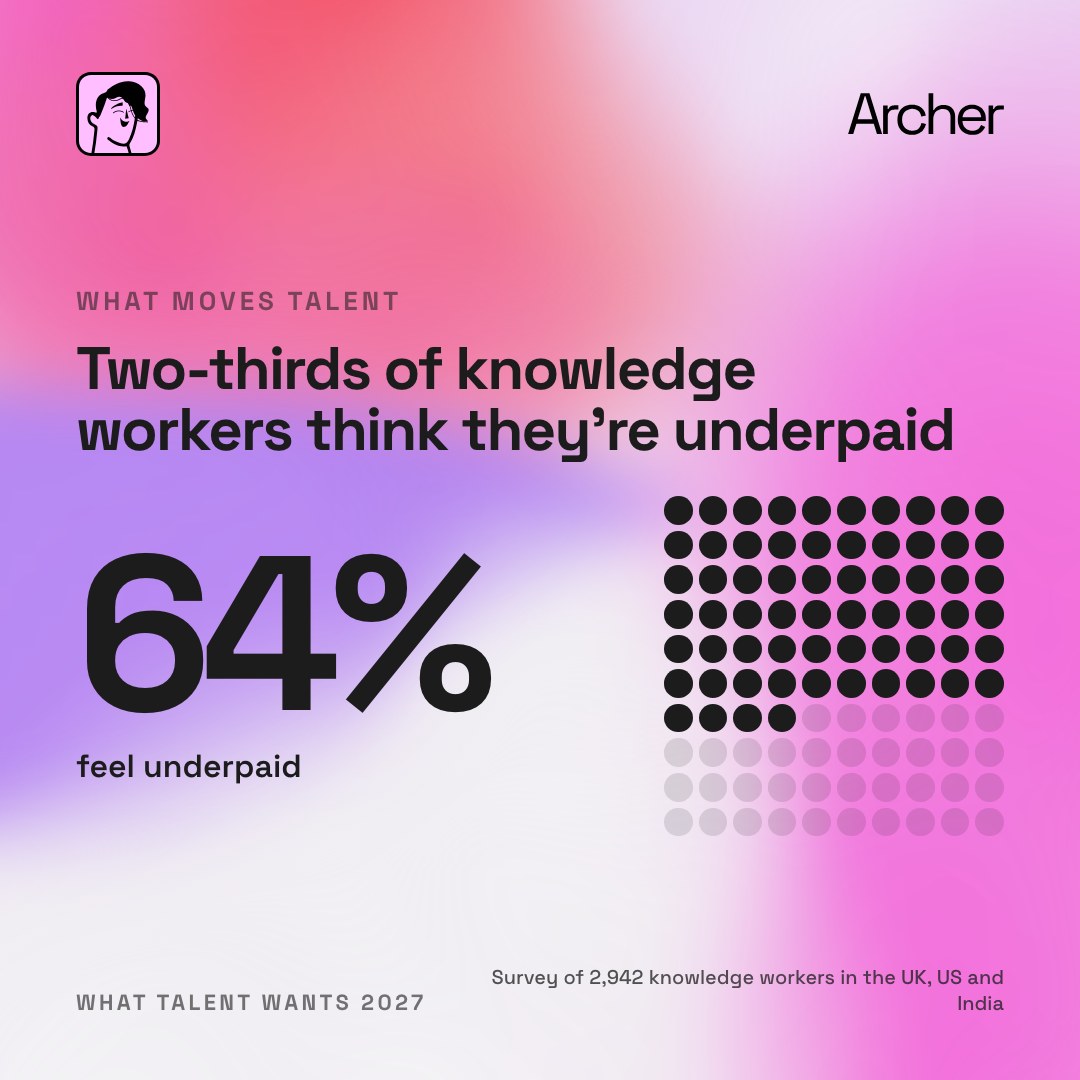
Two-thirds of knowledge workers think they're underpaid
64%
feel underpaid
64% feel underpaid and 27% feel significantly underpaid. Women and men are equally likely to say so (62% and 64%), and they rank what matters in a job in almost exactly the same order.
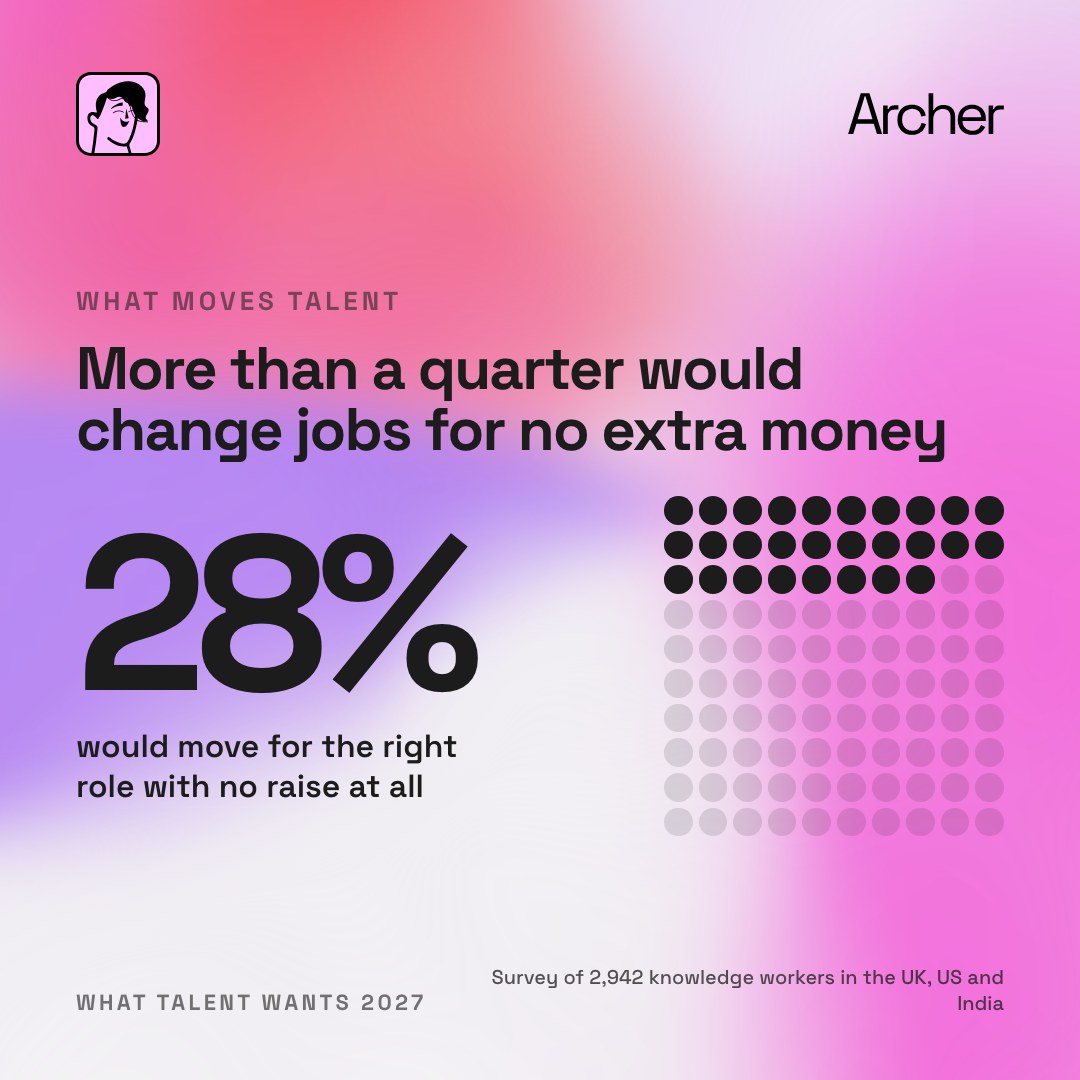
More than a quarter would change jobs for no extra money
28%
would move for the right role with no raise at all
Even so, plenty of people would move without a big raise. 28% would move for the right role with no raise at all, and 55% would move for 20% or less. About one in six say they wouldn't move for money alone. Overall, 66% say they're likely to change jobs in 2027.
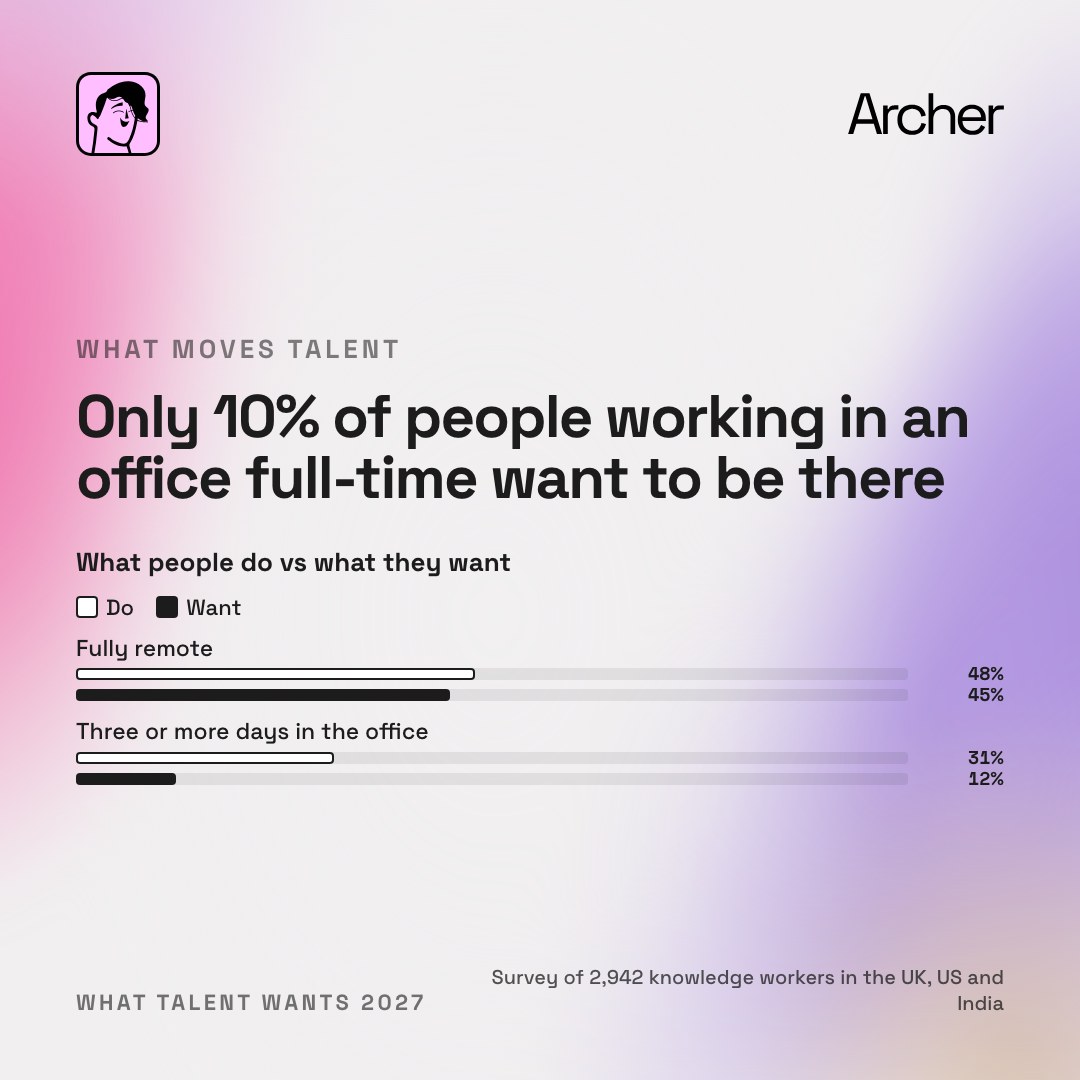
Only 10% of people working in an office full-time want to be there
Just over half of people (55%) work the pattern they'd choose for themselves. 29% are in the office more than they'd like and 16% are in less than they'd like.
- Do
- Want
- Fully remote
- Three or more days in the office
Remote work is roughly in balance, with 48% fully remote and 45% wanting to be. The mismatch shows up at three or more days in the office, which 31% do and only 12% want. Among people who are fully office-based, just 10% say that's the pattern they'd pick. Remote working has its own dissenters as well, with a quarter of fully remote workers saying they'd prefer some time in an office.
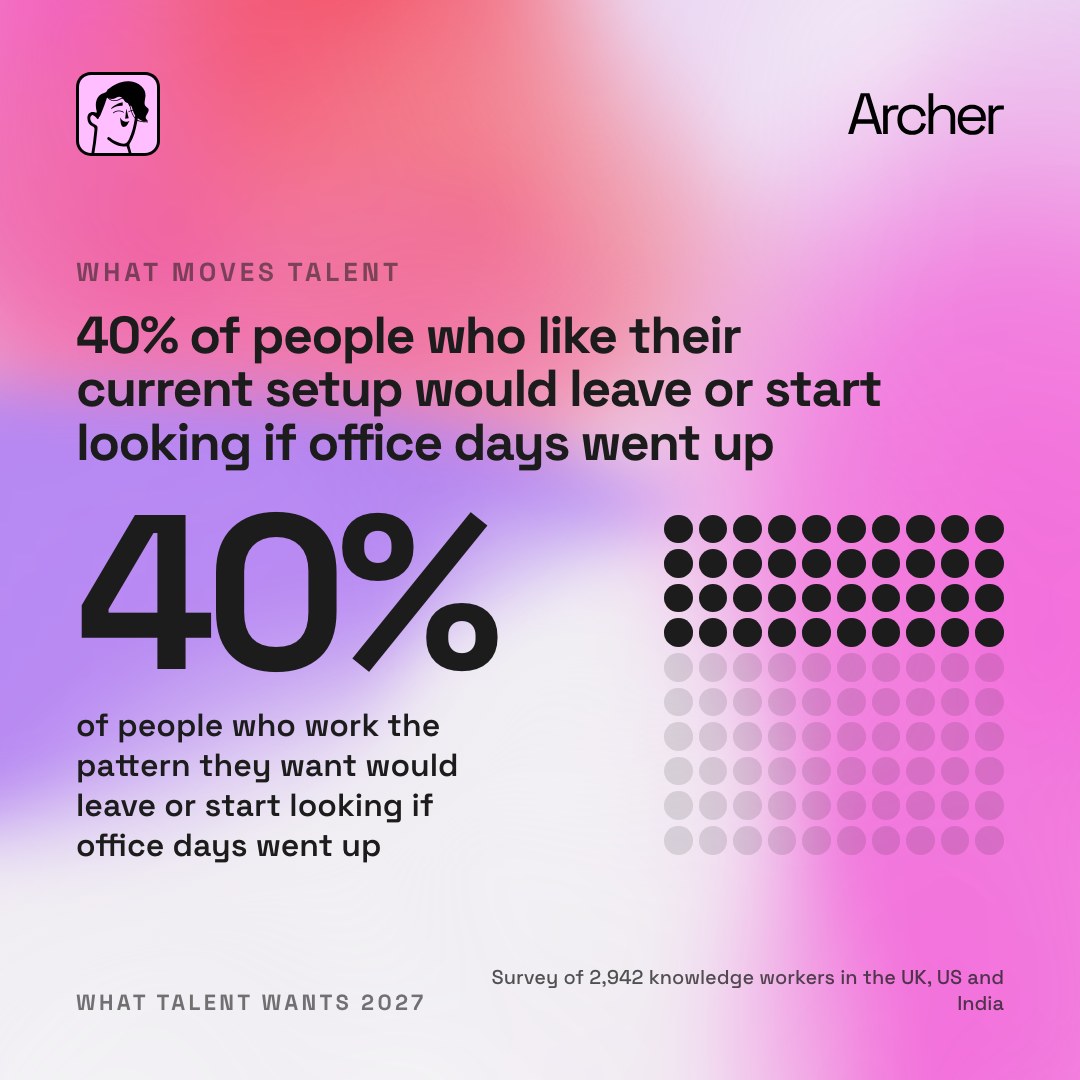
40% of people who like their current setup would leave or start looking if office days went up
40%
of people who work the pattern they want would leave or start looking if office days went up
The bigger risk for employers is in changing what people already have. Among those who currently work the pattern they want, 40% say they'd leave or start looking if their employer added office days, and 12% say they'd leave outright. Flexibility does more to keep the people you have than to win new ones.
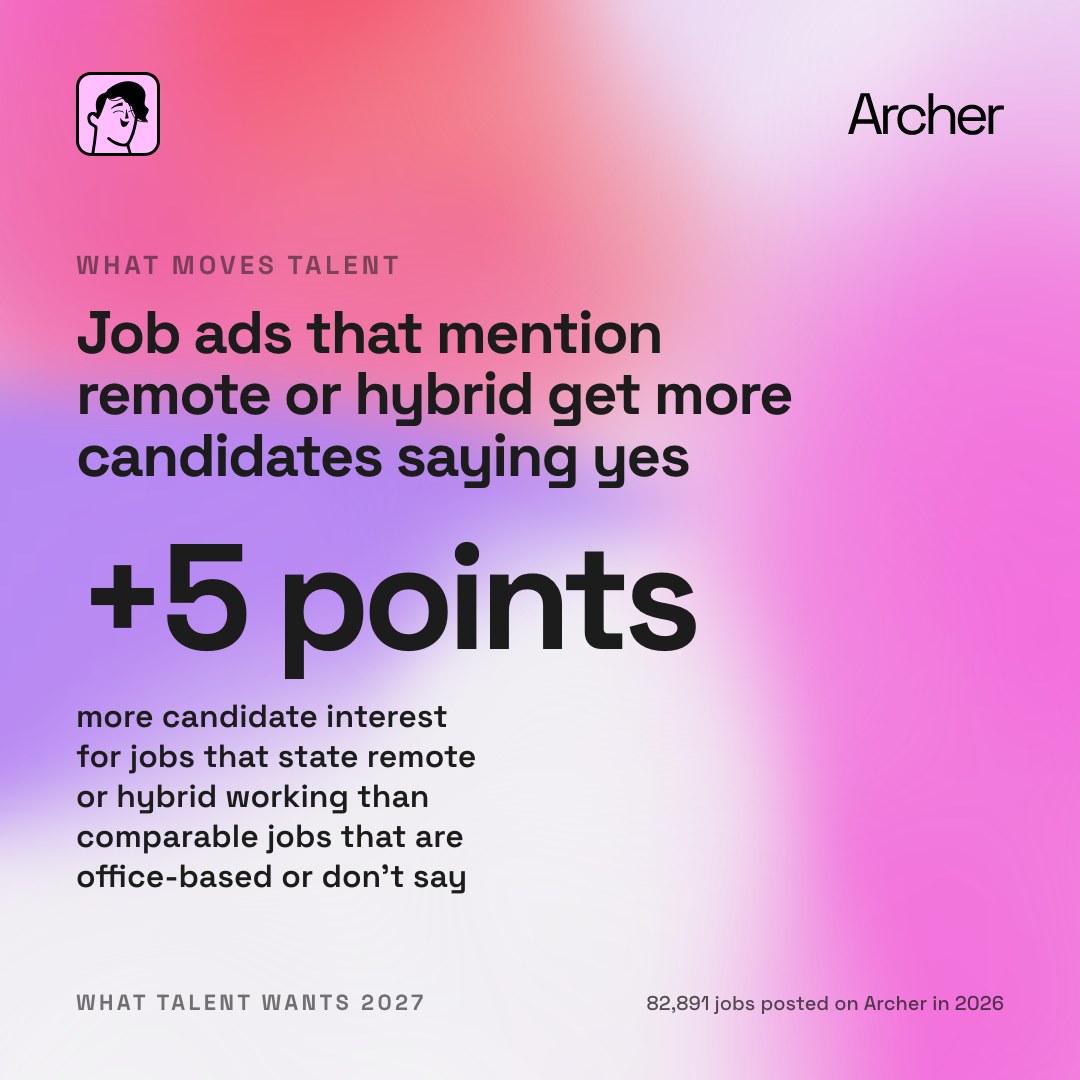
Job ads that mention remote or hybrid get more candidates saying yes
+5 points
more candidate interest for jobs that state remote or hybrid working than comparable jobs that are office-based or don't say
We can see this in how candidates behave as well as in what they tell us. On Archer, jobs that state remote or hybrid working get 5 points more candidate interest than comparable jobs that are office-based or don't say, and fully remote jobs get 11 points more than fully office-based ones. Those comparisons are between jobs from the same employer, in the same country, function and seniority.
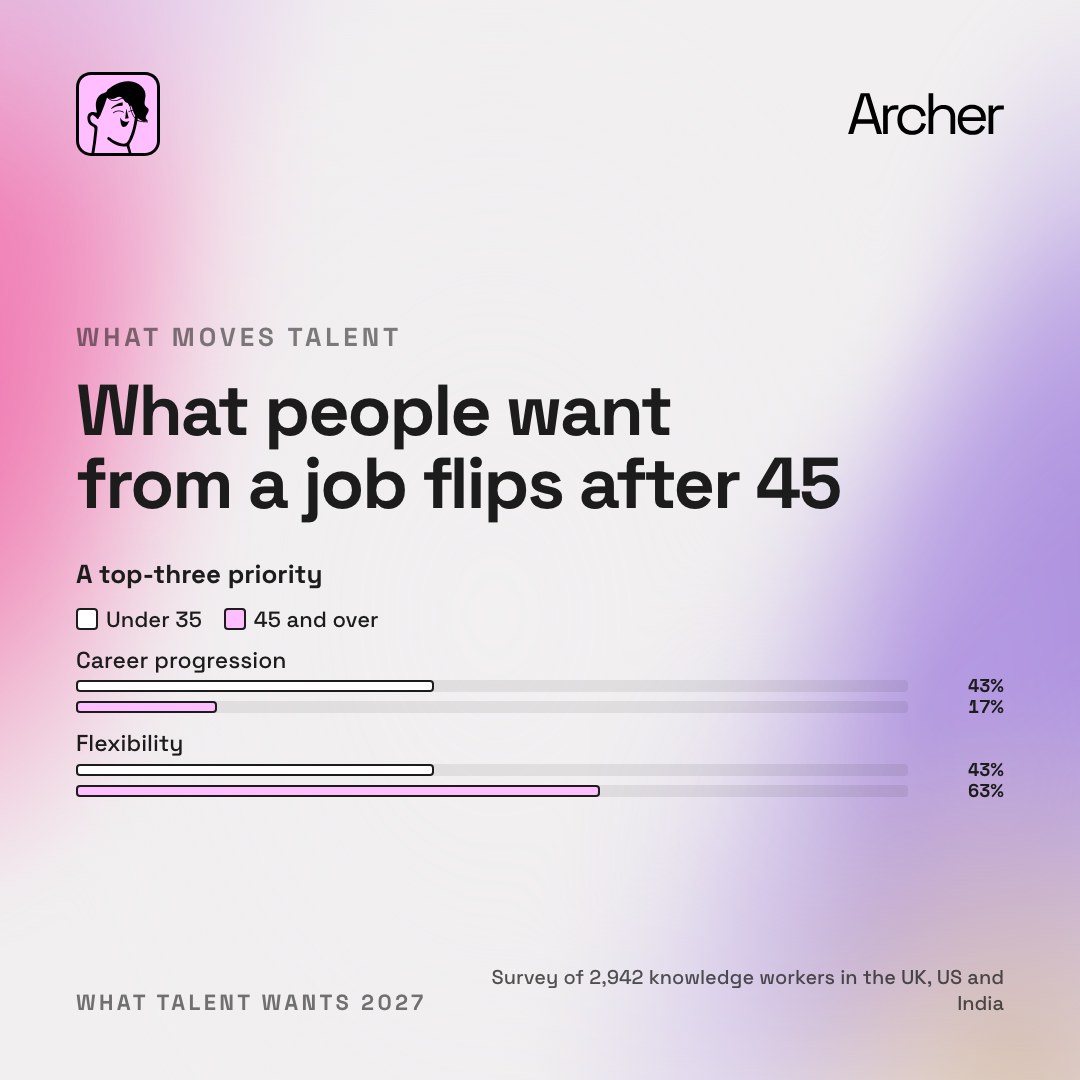
What people want from a job flips after 45
What people want shifts over the course of a career. Career progression is a top-three priority for 43% of people under 35 but only 17% of those 45 and over, while flexibility moves in the opposite direction, from 43% to 63%.
- Under 35
- 45 and over
- Career progression
- Flexibility
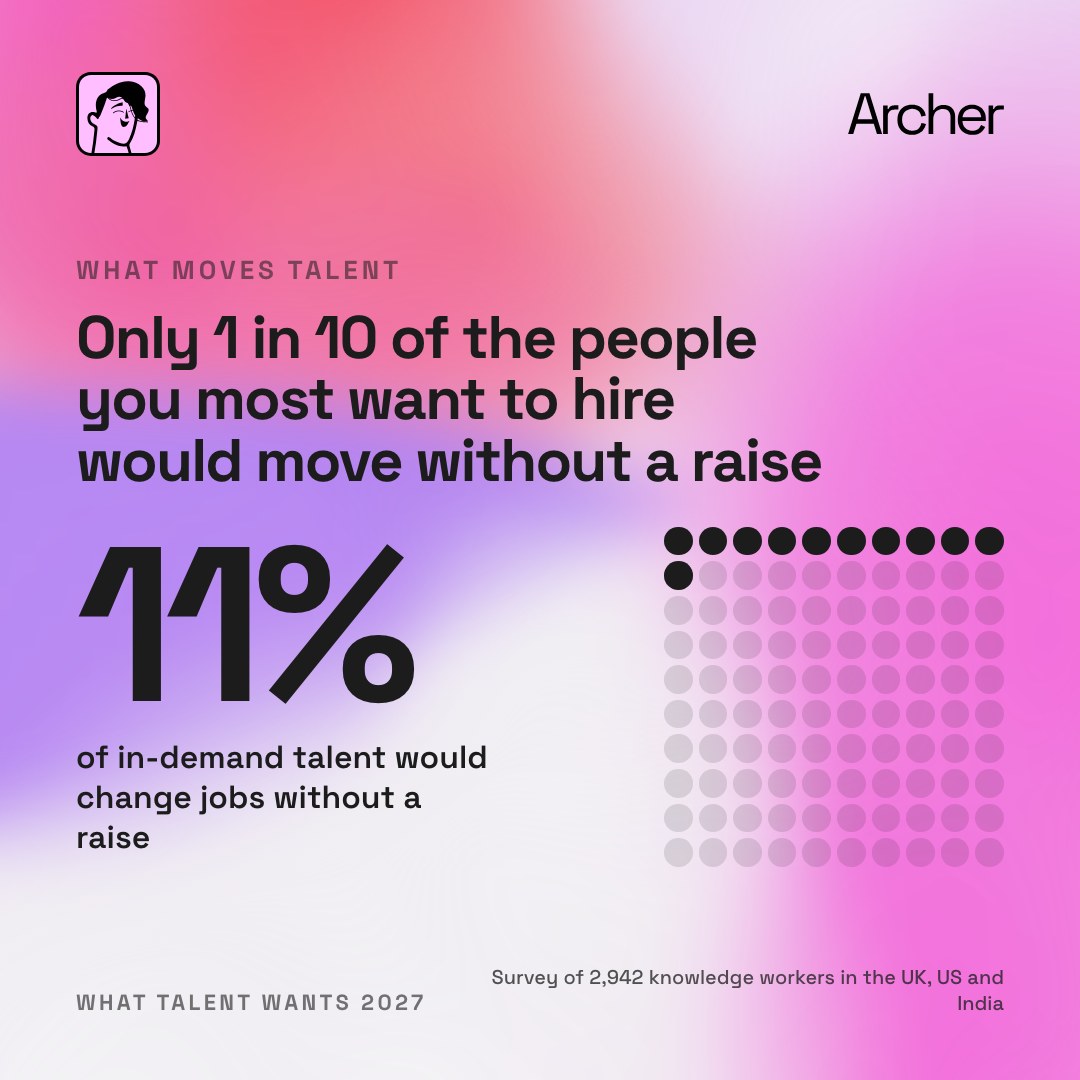
Only 1 in 10 of the people you most want to hire would move without a raise
11%
of in-demand talent would change jobs without a raise
People who aren't looking are harder to move and quicker to leave. Only 11% would change jobs without a raise, compared with 28% of everyone, and 36% would need 20% or more. They're also the most protective of their flexibility, with 44% saying they'd leave or start looking if office days went up. That doesn't put them out of reach, since 31% expect to change jobs in 2027 and another 42% aren't sure, but a vague offer won't be enough to move them.
4. The hiring process
6 findings
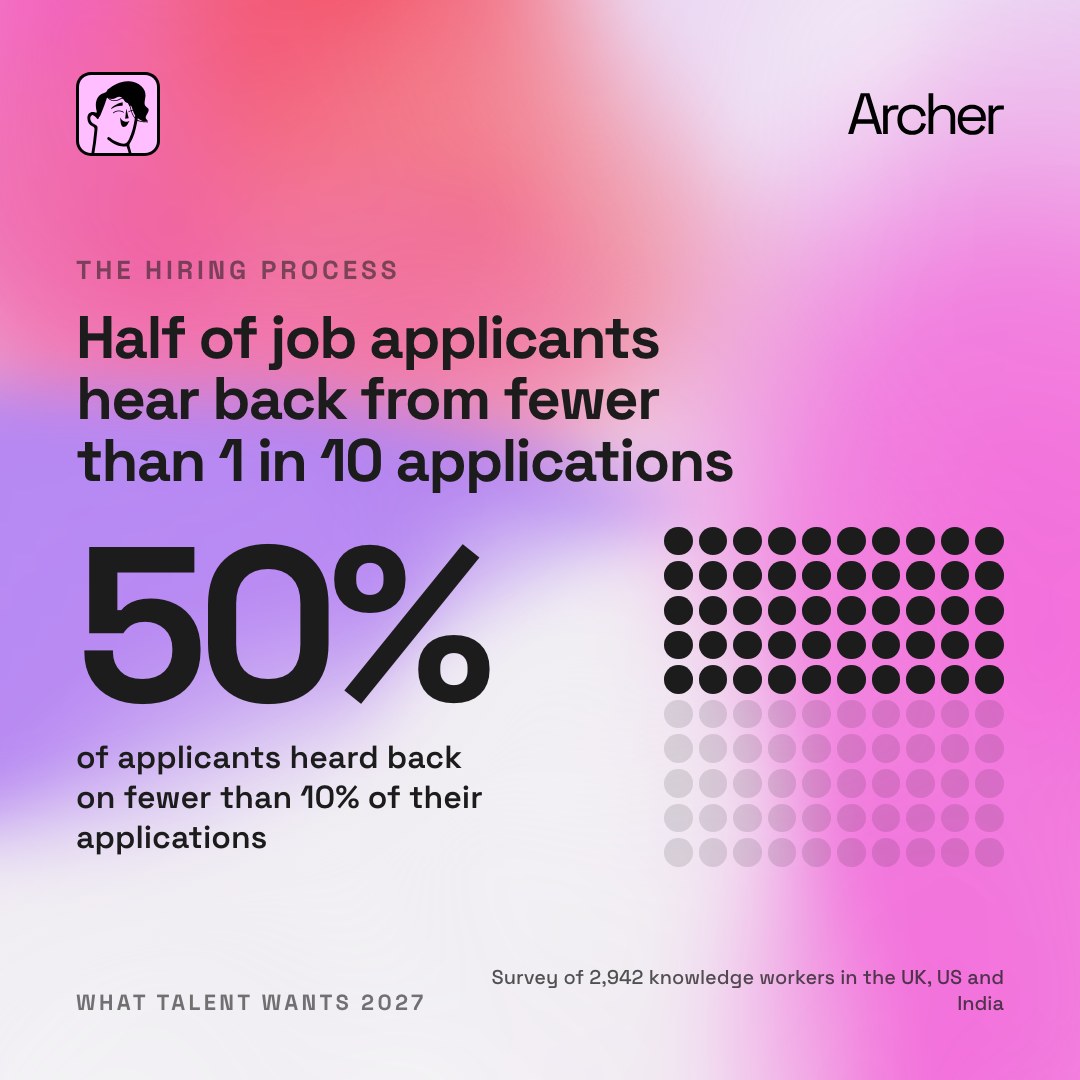
Half of job applicants hear back from fewer than 1 in 10 applications
50%
of applicants heard back on fewer than 10% of their applications
Of the people who applied for jobs in the last year, half heard back on fewer than 10% of their applications. It's worse in the US, where 58% say so, than in the UK at 42%.
Silence is also the most common way a live hiring process falls apart. 51% say poor communication or being ghosted ended a process for them in the last 12 months, which is nearly twice the next most common reason, too many stages, at 28%. Of everything we asked about, poor communication costs employers the most candidates.
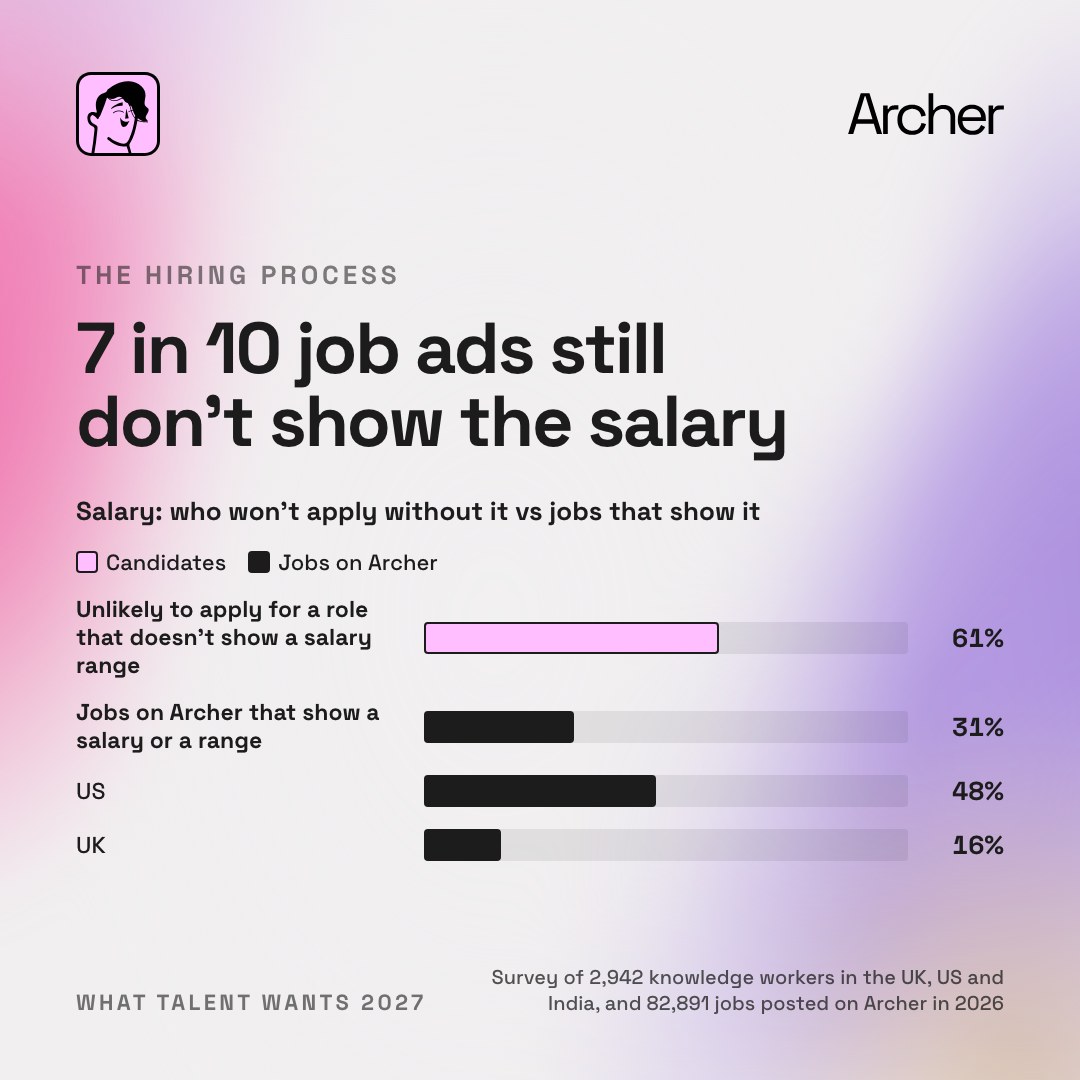
7 in 10 job ads still don't show the salary
61% of candidates are unlikely to apply for a role that doesn't show a salary range, and 30% say they're very unlikely to or simply wouldn't. Against that, only 31% of jobs on Archer show a salary or a range. The figure is 48% in the US, where several states now require it, and 16% in the UK, and it hasn't moved all year.
- Candidates
- Jobs on Archer
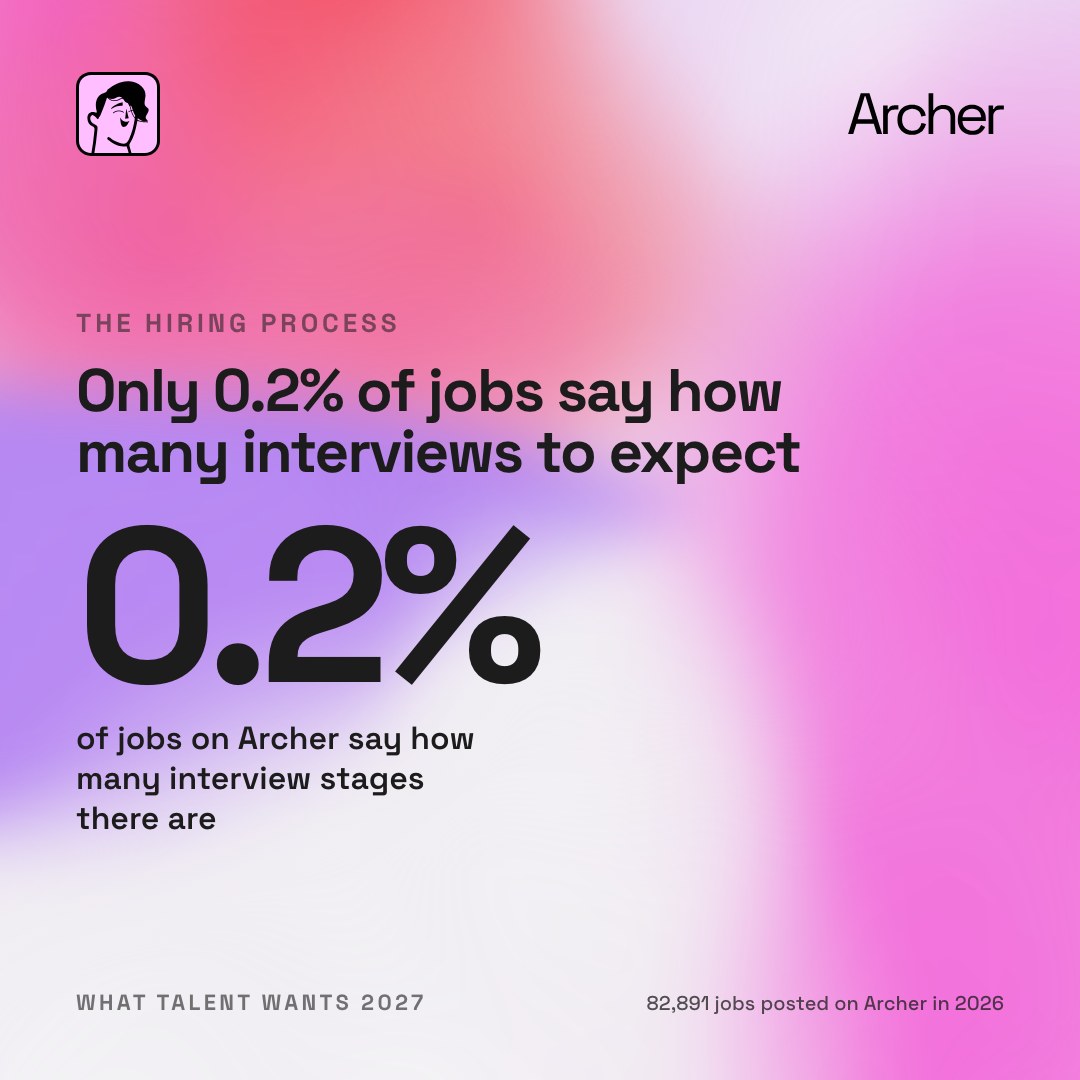
Only 0.2% of jobs say how many interviews to expect
0.2%
of jobs on Archer say how many interview stages there are
Four stages is where patience starts to run out. 49% would consider withdrawing from a process with four stages or fewer, and only 22% say the number of stages wouldn't put them off. Candidates can't plan around it, though, because almost nobody tells them: 0.2% of jobs on Archer say how many interview stages there are.
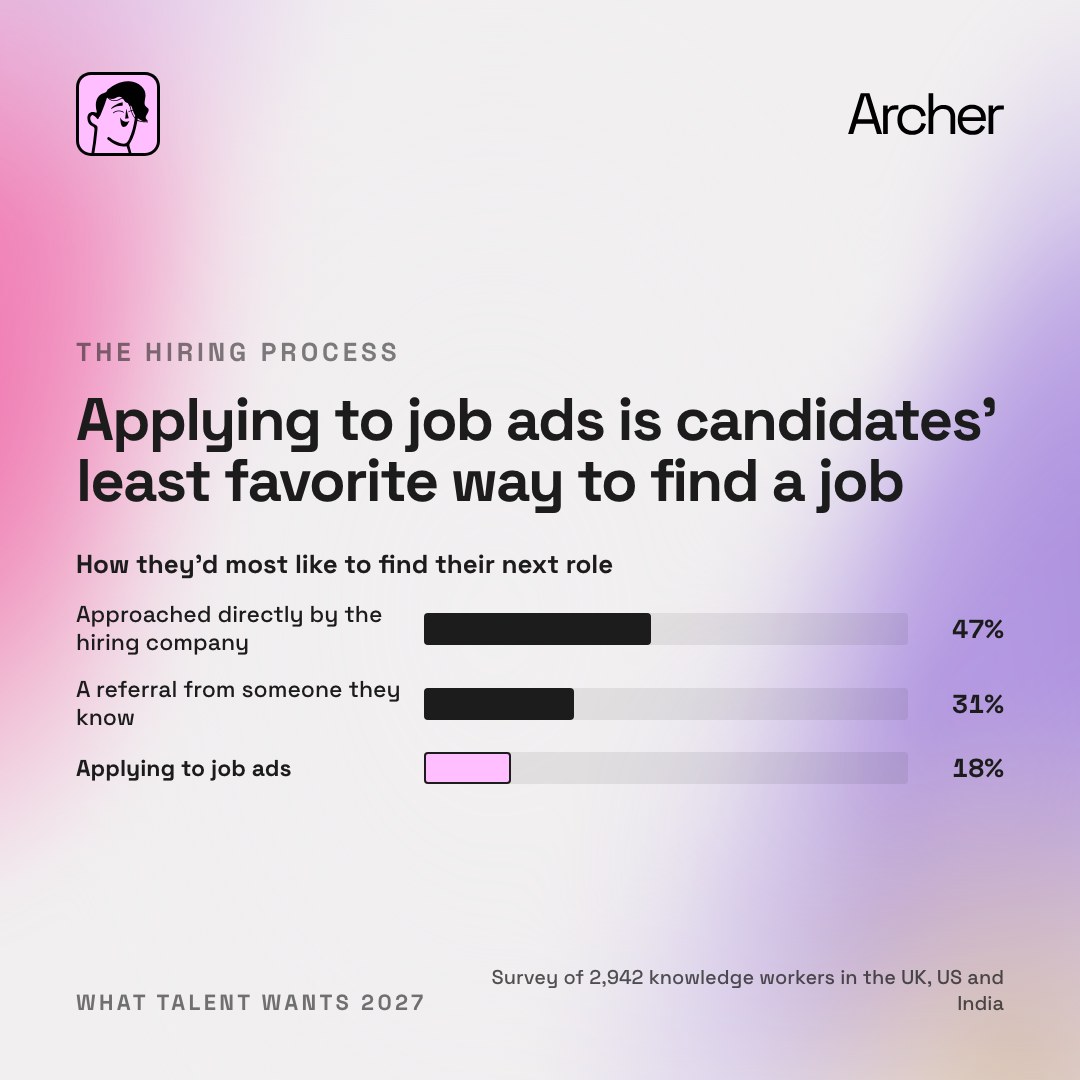
Applying to job ads is candidates' least favorite way to find a job
Asked how they'd most like to find their next role, 47% said they want to be approached directly by the hiring company and 31% want a referral from someone they know. Applying to job ads came last of the routes we asked about, at 18%.
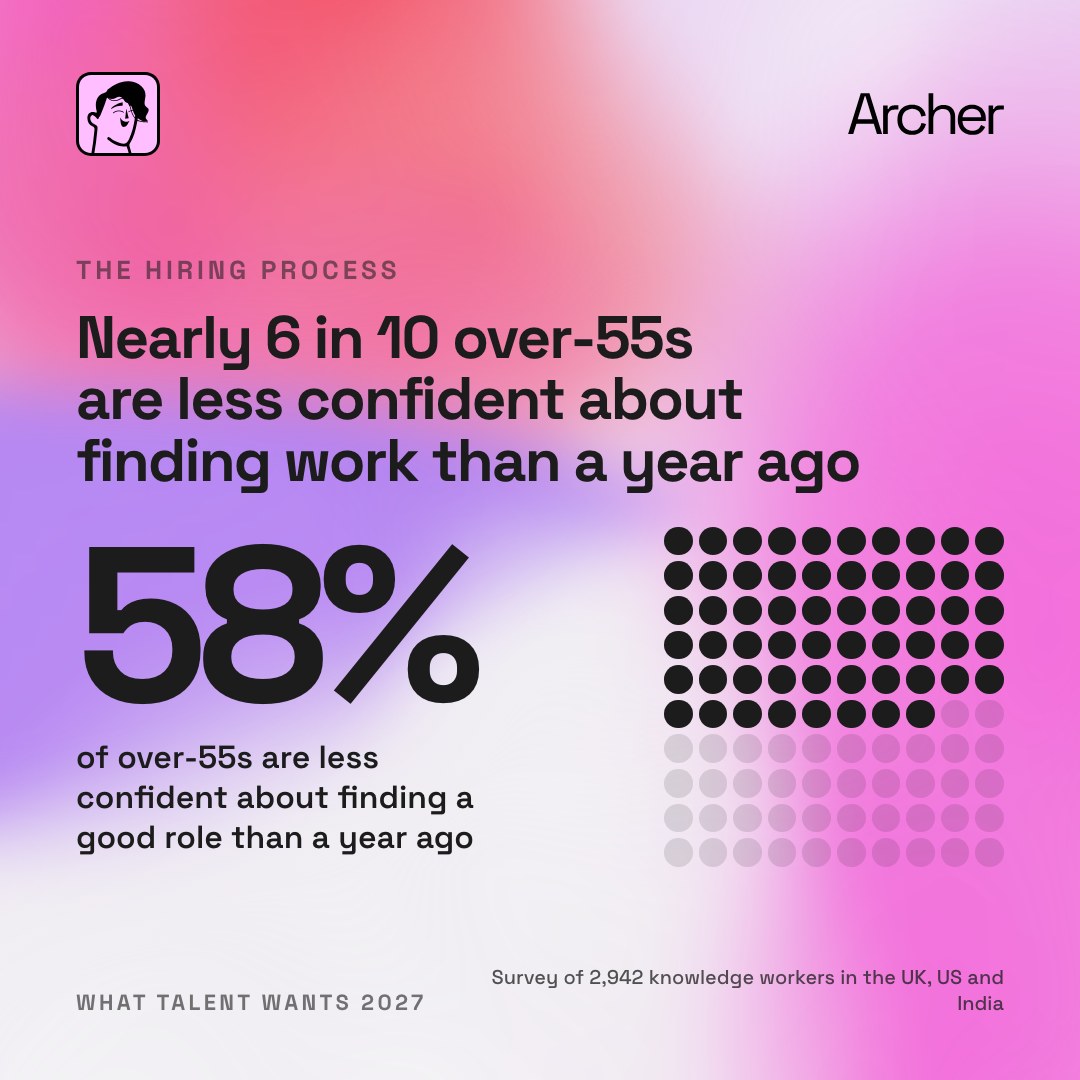
Nearly 6 in 10 over-55s are less confident about finding work than a year ago
58%
of over-55s are less confident about finding a good role than a year ago
The group having the hardest time is people aged 55 and over. 61% of them are out of work and looking, 58% are less confident about finding a good role than they were a year ago, and only 14% are more confident. When we asked what employers get wrong, 17% of them brought up age without being prompted.
Across everyone, 46% are less confident than a year ago and 27% are more confident. Among people who are currently in work the picture is closer to even, at 36% and 33%.
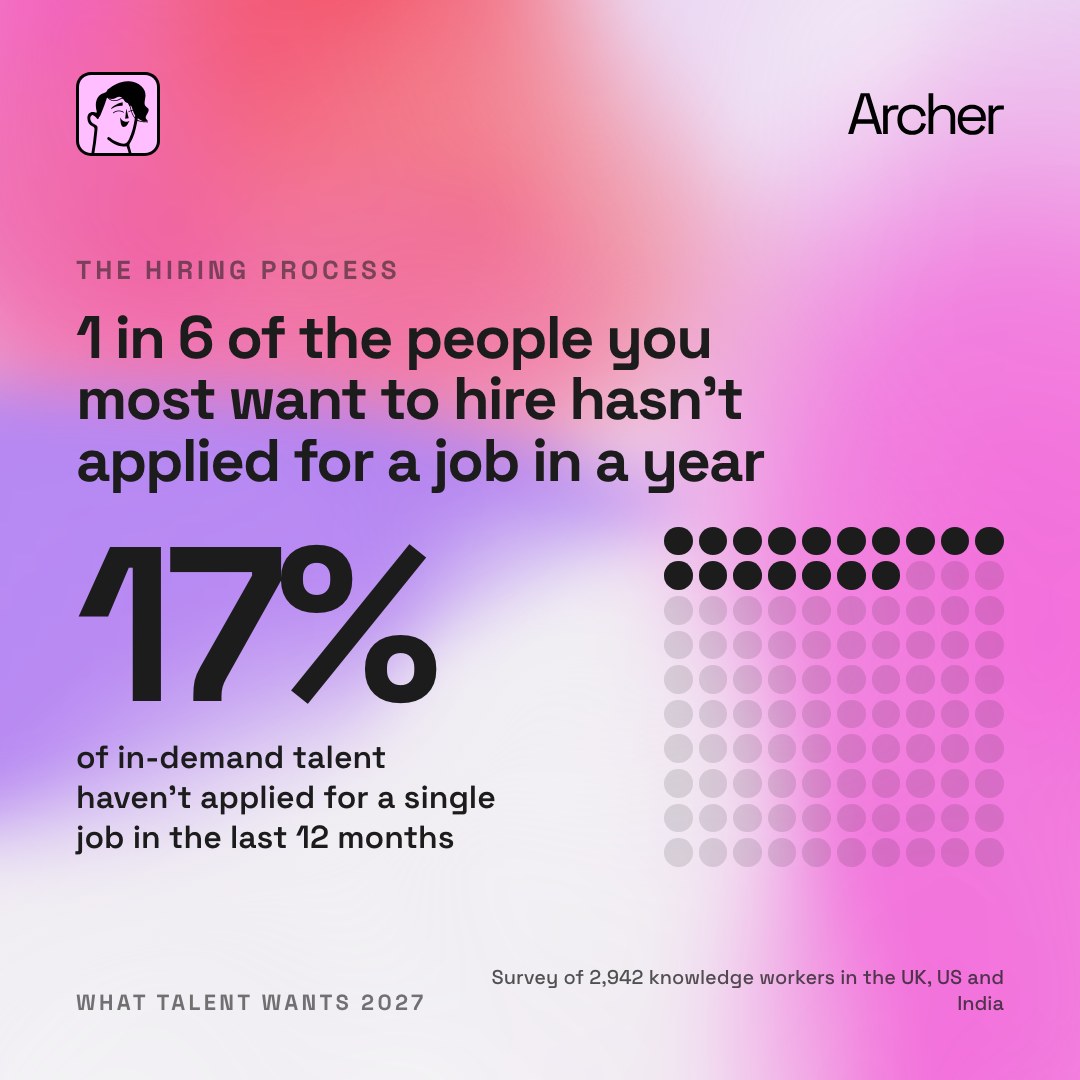
1 in 6 of the people you most want to hire hasn't applied for a job in a year
17%
of in-demand talent haven't applied for a single job in the last 12 months
In-demand talent won't come to you, and they won't guess at the salary either. 17% haven't applied for a single job in the last 12 months, 78% are unlikely to apply without a salary range, and half want to be approached directly, while only 14% want to apply to ads. This is the group every employer is trying to hire, and the standard hiring process is set up in a way that misses them.
AI for both sides
Both sides of hiring are now using AI. Candidates have AI, and nine in ten use it to job hunt. Employers have AI too, and candidates meet it as the screener and sometimes as the interviewer. Even with all of that, the basics still aren't being met. Most jobs don't show a salary, almost none say how many stages there are or whether AI is involved, half of applicants hear almost nothing back, and the people employers most want aren't applying at all.
We don't think anyone is behaving badly. A candidate using AI to apply is being sensible, and so is a recruiter using AI to cope with the volume. The issue is that each side's tools only help that side, so the things candidates have always wanted from a hiring process are no closer than they were.
Our view is that AI which works for both sides of hiring will win. That means AI that gets candidates what they're asking for, which is a clear salary, a fair hearing and a reply, and gets employers the people they can't otherwise reach.
That's the idea behind Archer. Candidates tell Archer what they want next, and Archer brings them roles that fit, with the pay and the working pattern up front. Recruiters tell Archer what good looks like and meet people who are already qualified and interested. Every hiring decision stays with a person.
Five things to do this quarter
- Put the salary on the job ad. Six in ten candidates are unlikely to apply without it, and among in-demand talent it's nearly eight in ten.
- Say how the job works. State the working pattern in days. Jobs that say remote or hybrid get more interest than comparable jobs that don't.
- Tell candidates what the process is. Say how many stages there are and where AI is used, and keep a person on the judgment calls.
- Close the loop. Reply to everyone who applies, because silence is the most common way a live process is lost.
- Train people on the AI you ask them to use. Asks for AI tripled this year, and most people handed the tools got no training.
FAQ
What is What Talent Wants 2027?
It's hackajob's study of what knowledge workers want from work and from the hiring process. The 2027 edition combines a survey of 2,942 knowledge workers in the UK, US and India with an analysis of 82,891 jobs posted on Archer in 2026.
What do candidates want most in 2027?
Fair pay, flexibility, transparency and a reply. Pay is a top-three priority for 69% of knowledge workers and remote or flexible working for 58%. Getting to work with AI is a top-three priority for 9%.
Are candidates comfortable with AI interviews?
Mostly not, in the UK and US. 67% are uncomfortable with an AI running their first-round interview and 13% are comfortable. In India, 49% are comfortable.
Will candidates apply to a job with no salary range?
Most won't. 61% of knowledge workers are unlikely to apply for a role that doesn't show a salary range. Among people in work who aren't looking, it's 78%. 31% of UK and US jobs on Archer show a salary.
How many jobs ask candidates to use AI?
The share of jobs on Archer asking candidates to use AI tools tripled between January and November 2026, from 6% to 19%.
What is in-demand talent?
In this report, in-demand talent means people who are in work and not looking for a job. They make up 23% of the UK and US survey sample.
Methodology
2,942 respondents. 82,891 unique jobs.