Building for millions: Megan’s journey to the BBC
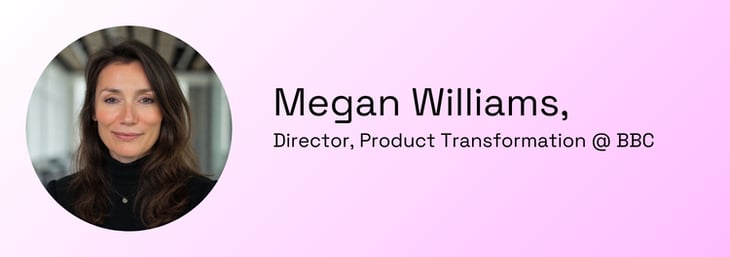
Megan’s career path doesn’t follow a neat, straight line. She started in finance, moved through private equity, helped scale early-stage tech ventures and now leads product transformation at the BBC, one of the world’s most iconic media organisations.
She’s worked across industries, navigating everything from fintech to green investment, and played a part in some of the most exciting moments in tech. Now she’s using all of that experience to shape how the BBC evolves in the digital age.
In this interview, Megan shares her journey, what makes her work at the BBC so fulfilling, and how years of fast-paced startup experience shaped the way she leads today.
You’ve worked across a range of industries, from finance to tech and beyond. Can you tell us about your career journey?
I started out in investment banking and then moved into private equity. That was about helping established companies grow and improve, often with a big cash injection and a bit of structural transformation. It was interesting work, but for me, the pace felt quite slow.
So I took a bit of a leap. I started working in tech ventures and consultancies that were much more hands-on, sometimes building things from scratch and other times helping early-stage companies scale. That’s where I got to work on things like Spotify. Apple Music had just launched, the competition was fierce, but Spotify’s tech and the way it was built really set it apart. It was fascinating to be part of that.
I also worked with fintech startups like Monese and helped grow a platform that started in China into something with a global presence. Each time, the role was about figuring out what needed to change, where to focus and how to grow.
Eventually, I joined the BBC. I started as Head of Product Transformation and then moved into the Director role. Now I focus on driving digital transformation across product teams, thinking about how we evolve the way we work and deliver even more value to audiences.
You’ve spent a lot of time helping early-stage companies grow. What did those experiences teach you about building products and scaling businesses, and how does that shape the way you work at the BBC now?
Every venture had its own personality and pace. Some were figuring out how to use their first round of funding. Others were already in the spotlight and trying to stay ahead.
With Spotify, for example, we were working through a tricky period. Apple Music had just entered the market, and there were other streaming platforms popping up. But what stood out was how well the tech was built. We knew others would find it hard to replicate.
At Monese, we were building something for people who didn’t have easy access to traditional banking. It was a very real problem with a clear mission behind it, which made the work feel meaningful.
The biggest lesson was probably this: there’s never one formula. Each product needs something slightly different, and scaling well often means being willing to adapt when things don’t go as planned.
That mindset has been really valuable at the BBC. It’s obviously a much larger and more established organisation, but at the heart of it, you’re still solving problems, creating better experiences for users and figuring out how to evolve. It’s just that here, the scale is bigger, the stakes are higher and the impact reaches millions. So those early-stage instincts — being curious, open-minded and focused on value — are just as important.
What’s been the most exciting part of leading digital transformation at the BBC?
It’s the scale and the purpose. When something shifts at the BBC, it touches millions. You really feel the impact of the work. That’s exciting.
It’s also the most diverse organisation I’ve ever been part of. People come from so many different backgrounds and bring a huge range of experience. When you bring a group like that together around a shared goal, it leads to better collaboration and better outcomes.
I’ve always been drawn to companies that are purpose-led, ones that add real value. That’s definitely true here. We’re not just building tech for the sake of it. We’re making a difference in how people access news, culture and information.
Final thoughts: What we can learn from Megan’s journey
Megan’s story is a great example of how taking unexpected turns in your career can open up new opportunities. She didn’t stick to one industry or job title. She moved between fast-paced startups and structured organisations, gaining a toolkit of skills that now serve her well at the BBC.
Her career also reminds us that transformation isn’t just about tech. It’s about people. Whether you're helping a small team launch a product or leading change in a national institution, it all comes down to how you bring others along with you.
And perhaps most importantly, Megan’s path shows that the most exciting roles often come after a pivot. When you follow curiosity, embrace the unknown and trust what you’ve learned along the way, good things tend to happen.
Want to join the BBC?
If you’d like to join the team at the BBC, set up your free hackajob profile. As a reverse marketplace, hackajob puts you in control—accept or decline requests from employers based on what interests you most.
Read more about the BBC here.
Like what you've read or want more like this? Let us know! Email us here or DM us: X, LinkedIn, or Instagram, we'd love to hear from you.